
A website can hold a top-three position for months and then lose visibility without a single page being edited. Competitors may move above it, impressions may decline, and the search results themselves may begin showing different formats. When this happens, the most common assumption is that recent changes to Google algorithms have penalized the website.
Google algorithms do not operate as one fixed formula that assigns every page a permanent score. Search relies on a collection of automated ranking systems, language-understanding technologies, quality classifiers, link-analysis systems and spam-prevention mechanisms. These systems work together to determine which indexed pages are most likely to satisfy a particular search.
The result can vary according to the wording of the query, the searcher’s location, the freshness of the topic, the type of information required and the available competing pages. A detailed guide may be the best result for one query, while a product page, video, local listing, forum discussion or short definition may be more useful for another.
Search has also become more complex as conventional organic listings now appear alongside featured snippets, image packs, videos, discussions, local results, AI Overviews and AI Mode responses. However, the basic objective behind Google algorithms has not fundamentally changed. Google still needs to discover content, understand it, determine whether it is useful and compare it with other available results.
This guide explains how Google algorithms work in 2026, which ranking systems matter, how recent updates should be interpreted and what SEO teams can do when search visibility changes.
What Are Google Algorithms?
Google algorithms are automated processes used to retrieve, evaluate and organize information in response to a search. In everyday SEO discussions, the term is often used as a broad label for everything that influences rankings. In reality, Google algorithms consist of many connected processes rather than one isolated ranking formula.
Before Google can rank a page, it must first discover and process it. A page with excellent content cannot perform in organic search when Googlebot cannot access it, when an indexing directive excludes it or when Google selects a different URL as the canonical version.
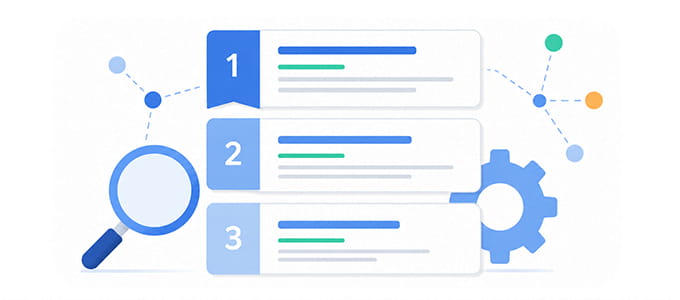
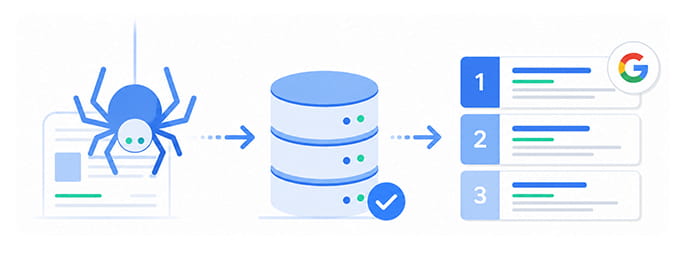
Google generally describes Search as a process involving crawling, indexing and serving results. Understanding these stages is essential because ranking problems can begin long before Google compares the quality of one page with another.
Crawling: How Google Discovers Web Content
Crawling is the discovery stage of Google Search. Automated programs commonly known as crawlers or Googlebot follow links, process sitemaps and revisit previously discovered URLs to find new or updated content.
Google does not crawl every URL with the same frequency. A frequently updated news website may be revisited more often than an inactive page that has not changed for several years. Internal linking, server reliability, sitemap quality and the overall accessibility of the site can all influence how efficiently Google discovers its pages.
A page may remain undiscovered when it has no internal links, is absent from relevant sitemaps or can only be reached through interactions that crawlers cannot reliably process. This is why orphan pages are a technical and strategic problem. Even when the page exists and provides useful information, both users and search engines may struggle to find it.
Crawling should therefore be viewed as the foundation of visibility rather than a guarantee of ranking. Being crawled only means that Google was able to access the resource. It does not mean the page will be indexed or considered competitive.
Indexing: How Google Understands and Stores a Page
After crawling a page, Google attempts to understand its main content, purpose and relationship with other documents. During indexing, Google can analyze text, images, videos, structured data, headings, links and other page elements.
Google may also determine that several URLs contain substantially similar content. In that situation, it can cluster the pages and choose one representative canonical URL. The canonical selected by Google is not always the URL declared by the website, especially when internal links, redirects, sitemaps and canonical tags provide conflicting signals.
A crawled page is not automatically added to the index. Google may decide that the content is duplicative, inaccessible, low value, blocked by a directive or insufficiently useful to include. Indexing can also change over time as pages are updated, consolidated or reassessed.
This is why technical investigations should distinguish between discovery and indexation. A page appearing in server logs does not prove that it is indexed, just as submitting a sitemap does not guarantee that every included URL will be stored or shown in Search.
Ranking and Serving: How Google Selects the Results
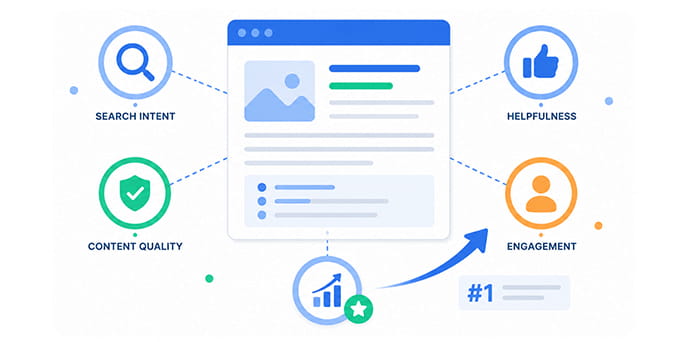
When a user submits a query, Google searches its index for eligible content and evaluates which results are most relevant and useful. Google algorithms and ranking systems examine many signals across an enormous collection of indexed documents before deciding what to display.
Relevance is only one part of the process. A page may mention the correct subject but still be less helpful than a competing result because it is outdated, poorly organized, unsupported or misaligned with the actual search intent. Google may also determine that the user needs a different content format, such as a video demonstration rather than a written guide.
Rankings are therefore comparative. A page does not receive a position in isolation; it is evaluated against other pages that are eligible for the same search. A technically sound article can move down when a competitor publishes a more complete, trustworthy or better-aligned resource.
Most ranking evaluations occur at page level, although Google also uses some site-wide signals and classifiers. This means a strong domain does not guarantee that every page will rank, while one weak article does not automatically destroy the visibility of the entire website.
Algorithm, Ranking System, Signal and Update: What Is the Difference?
Discussions about Google algorithms often use the terms algorithm, ranking system, signal and update interchangeably.That can make ranking changes more confusing because each term refers to a different part of the search process.
Understanding the distinction helps website owners avoid inaccurate conclusions. A change in one ranking signal is not necessarily a new algorithm, and a broad core update is not the same as a manual penalty applied to an individual website.
Ranking Systems and Ranking Signals
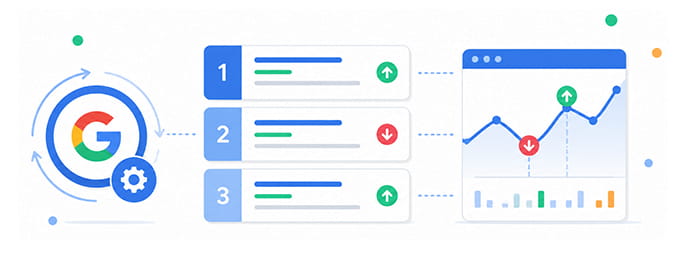
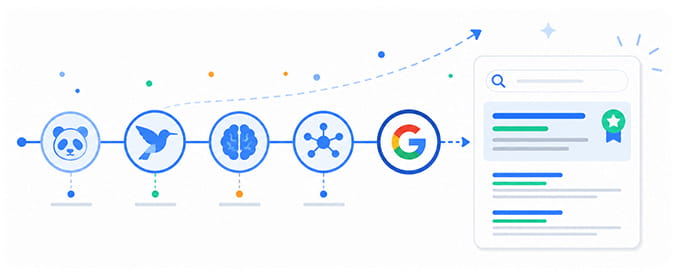
A ranking system is a broader technology or process that Google uses to evaluate and organize search results. BERT, RankBrain, neural matching and link-analysis systems are examples of technologies that contribute to how Search understands queries and content.
A ranking signal is a piece of information that may contribute to an evaluation. Relevance, link relationships, freshness and elements of page experience can provide signals, but Google does not publish a complete list or reveal a fixed numerical weight for each one.
The value of a signal can vary according to the search. Freshness may have considerable importance for a query about a recent product recall, software release or breaking event. The same signal may matter far less for a search about a stable scientific principle or historical definition.
This is one reason attempts to reduce Google algorithms to a universal ranking formula are unreliable. A claim that backlinks, keyword density or page speed represents a fixed percentage of every ranking decision ignores the query-dependent nature of Search.
Algorithm Updates and Core Updates
A Google algorithm update is a change to one or more systems used to understand, evaluate or organize search results. Many small changes happen continuously and are never announced publicly. Others affect enough queries or websites that Google confirms the rollout through its Search Status Dashboard or Search Central documentation.
A core update is a broad change to Google’s core ranking systems. It does not normally target one website, industry or isolated SEO technique. Instead, it can alter how Google evaluates and compares content across a wide range of searches.
When a page loses positions during a core update, that movement does not automatically mean the page has been penalized. Google may have developed a better understanding of the query, found more helpful alternatives or changed how several quality signals are combined.
A spam update is different because it focuses on improving systems that identify practices violating Google’s spam policies. Websites affected by a spam update should review whether their content, links or publishing methods conflict with those policies.
Why These Differences Matter for SEO Diagnosis
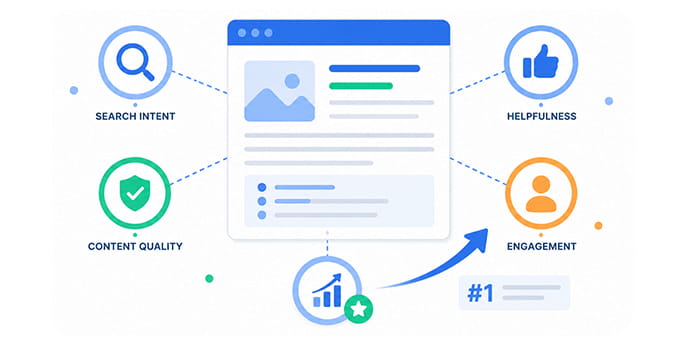
The correct response depends on the type of change involved. A manual action requires reviewing the report in Search Console and directly resolving the identified violation. A technical indexing problem requires investigating crawling, canonicalization or directives. A core update loss usually demands a broader comparison of content quality, intent and competing results.
Treating every decline as an algorithmic penalty can lead to unnecessary and damaging changes. Teams may delete valuable content, rewrite successful pages or disavow legitimate links before identifying the actual cause.
The terminology is not merely academic. It determines whether an SEO team investigates the website, the content, the SERP, the competition or Google’s documented policies first.
Google Algorithm Updates in 2026
Google continues to make announced and unannounced changes throughout the year. As of July 19, 2026, the official Search Status Dashboard records a February Discover update, a March spam update, a March core update, a May core update and a June spam update.
The March 2026 core update began on March 27 and completed on April 8. The May core update ran from May 21 until June 2. Google then launched a global spam update on June 24, completing it on June 26. The February Discover update lasted from February 5 to February 27 and specifically concerned the systems used to surface content in Google Discover.
These dates provide essential context for investigating how Google algorithms may have affected ranking volatility, but they do not identify the cause of every movement during the same period. A website migration, technical deployment, seasonal decline or competitor improvement can overlap with an official rollout.
The correct approach is to compare the timing and pattern of the change. When several pages within the same topic lose visibility during a core update, a broad reassessment may be involved. When only one URL disappears after its canonical tag was modified, the algorithm update is probably unrelated.
An Update Is Context, Not a Diagnosis
An announced update tells you when Google changed a system, but it does not explain exactly why one page moved. Diagnosis still requires evidence from ranking history, Search Console, technical crawling and competitor analysis.
A meaningful investigation should determine whether the decline affected individual pages or the entire domain, whether competitors gained at the same time and whether the SERP began favoring a different format. It should also separate mobile from desktop and branded from non-branded searches.
The update timeline becomes useful when it is combined with these patterns. It helps establish a possible relationship, but it should not replace the investigation itself.
The Most Important Google Ranking Systems
Google documents several notable systems that help explain how modern Google algorithms understand and rank content. These systems should not be treated as individual SEO targets with separate optimization tricks.
The more useful approach is to understand what each system is designed to accomplish. That allows content creators to build pages that are clear, relevant, original and useful across multiple forms of evaluation.
BERT and Contextual Language Understanding
BERT helps Google understand how combinations of words communicate meaning and intent. Instead of evaluating every term as an isolated keyword, the system can consider the relationship between words within a phrase.
This ability is particularly valuable for conversational or ambiguous searches. Small words such as prepositions can significantly change the meaning of a query, and BERT helps Google interpret those relationships more accurately.
There is no special BERT optimization technique. Repeating an exact keyword does not make the page easier for the system to understand. Content should instead explain the subject naturally, answer the intended question and use terminology accurately.
For SEO teams, the practical lesson is to write for complete meaning rather than isolated phrases. A page should explain how concepts relate to one another and address the questions users are likely to encounter as they move through the topic.
RankBrain and Neural Matching
RankBrain helps Google understand relationships between words and concepts. Neural matching also allows Search to compare conceptual representations of queries and pages, which is useful when the searcher does not know the precise terminology used by an expert resource.
A user might describe the symptoms of a technical SEO problem without searching for its formal name. Google can still connect that description with a page explaining canonicalization, crawlability or another relevant concept.
These systems reduce the value of producing separate pages for every minor keyword variation. Creating one page for “SEO audit software,” another for “software for SEO audits” and a third for “website SEO auditing software” can generate duplication without serving distinct user needs.
A stronger content strategy assigns each page a clear intent. Closely related keyword variations can usually be addressed naturally within one comprehensive page, while a new URL should be created only when the searcher’s objective genuinely changes.
Passage Ranking and Section-Level Understanding
Passage ranking helps Google understand that a particular section of a long page may be especially relevant to a query. It does not turn paragraphs into separate indexed pages, but it improves Google’s ability to identify useful information within broader content.
This makes content structure important. A detailed guide should not hide a valuable explanation inside an unrelated wall of text. Descriptive headings, focused paragraphs and logical transitions make the page easier for both readers and search systems to interpret.
Passage ranking is not a reason to create a heading for every sentence. Excessive fragmentation can damage the reading experience and weaken the relationship between ideas. Each section should be long enough to develop one meaningful subtopic while remaining clearly connected to the larger article.
The goal is not to produce more headings. It is to create sections with a defined purpose, a complete explanation and a logical place within the page.
Helpful Content and Original Content Systems
Google algorithms are designed to prioritize helpful and reliable information created primarily for people. The former standalone helpful content system became part of Google’s core ranking systems in March 2024, meaning helpfulness should no longer be treated as an occasional update affecting only certain publishing periods.
Helpful content allows the reader to complete a task, understand a subject or make a decision without returning to the search results because basic information was missing. It should answer the primary question, explain relevant limitations and provide enough detail for the complexity of the topic.
Originality also matters. A page that simply rewrites the current top results may cover the expected headings but still provide no compelling reason to rank above them. Google uses systems intended to surface original reporting and content rather than pages that only summarize existing sources.
Original value can come from proprietary data, expert interviews, first-hand testing, custom examples, screenshots, case studies or a genuinely useful framework. The asset does not need to be expensive, but it should add something competitors have not already provided.
E-E-A-T and the Importance of Trust
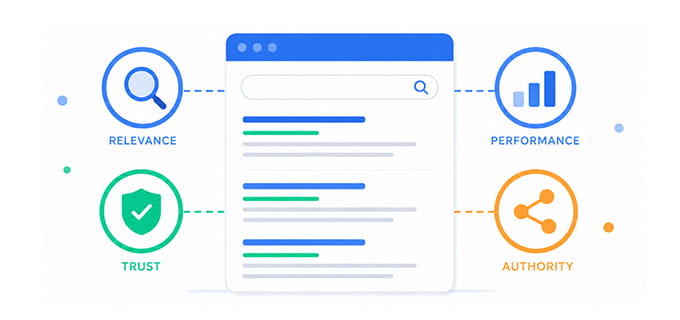
E-E-A-T refers to Experience, Expertise, Authoritativeness and Trustworthiness. Google explains that E-E-A-T is not one specific ranking factor. Instead, its systems use multiple signals that may help identify content demonstrating these qualities.
Experience is shown when the creator has genuinely used a product, completed a process or worked with the subject. Expertise relates to the knowledge required to explain the topic accurately. Authoritativeness concerns the reputation of the creator or website within the field, while trust involves accuracy, transparency and reliability.
Adding an author biography does not automatically establish E-E-A-T. The visible information should be supported by the content itself. A software review claiming first-hand experience should include testing details, screenshots or observations that could only come from actual use.
Trust becomes especially important for topics that may affect health, finances, safety or major life decisions. In these areas, unclear authorship, unsupported claims or misleading information can create a greater quality concern than they would on a low-risk entertainment page.
PageRank and Link-Analysis Systems
PageRank remains part of Google’s core ranking systems, although modern link analysis is far more sophisticated than counting how many websites point to a page. Google uses links to understand relationships between pages and identify resources that may be particularly useful or authoritative.
A relevant editorial link from a respected industry resource can provide stronger context than hundreds of links from unrelated directories. Link location, surrounding content and the nature of the referring page all affect what the relationship communicates.
Internal links are equally important for website architecture. They help users discover related resources, show Google how topics connect and ensure important pages are not isolated from the rest of the site.
Sustainable link acquisition begins with creating something worth referencing. Original statistics, useful tools, detailed research, templates and authoritative evergreen resources are more likely to attract meaningful links than generic articles created only to target a keyword.
Reviews and Freshness Systems
Google’s reviews system aims to reward reviews that demonstrate original research, insightful analysis and genuine subject knowledge. Thin pages that repeat manufacturer descriptions are less useful than reviews explaining how the product was tested, who it suits and where it performs poorly.
The system applies to individual reviews, comparisons and ranked recommendation pages. Quality depends more on evidence and originality than length. A concise review based on genuine testing can be more valuable than a lengthy article assembled from public product specifications.
Freshness systems address a different need. Google attempts to surface recent information when the query demands it, such as searches involving active events, new software releases, product recalls or current regulations. Evergreen topics do not necessarily benefit from the same degree of recency.
Changing a publication date without making meaningful revisions does not create genuine freshness. A useful update should correct outdated information, replace obsolete screenshots, add important developments or improve sections that no longer satisfy the current search intent.
Page Experience and Core Web Vitals
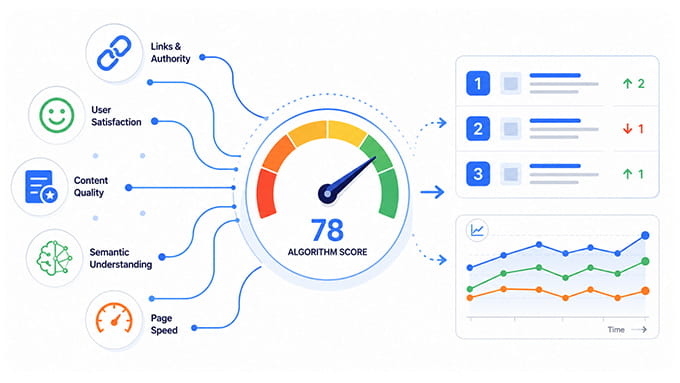
Google’s core ranking systems consider signals that align with a good overall page experience. Core Web Vitals measure loading performance, interaction responsiveness and visual stability, but Google does not describe page experience as one universal ranking score.
A page with excellent Core Web Vitals is not guaranteed to outrank a more relevant result. At the same time, poor usability can reduce the value of strong content when visitors struggle to read, navigate or interact with it.
Page experience includes more than performance metrics. Mobile presentation, HTTPS, intrusive interstitials, disruptive advertising and the visibility of the main content all affect whether the page is comfortable and trustworthy to use.
Technical performance should therefore support content quality rather than replace it. Speed cannot compensate for irrelevant information, but it can become a meaningful advantage when several pages provide similarly useful answers.
Deduplication and Site Diversity
Google uses deduplication systems to avoid filling the results with substantially similar pages. When multiple URLs contain overlapping content, Google may cluster them and select one representative version.
This creates practical problems when several pages on the same website target the same intent. Google may rank the wrong URL, alternate between pages or divide relevance and link signals across multiple resources.
Site diversity systems also generally prevent one domain from occupying an excessive number of top positions. More than two results can appear when Google considers them particularly relevant, but producing many similar pages is not a reliable way to control the SERP.
Cannibalization should be resolved by understanding the purpose of each URL. Pages can be consolidated, redirected, differentiated or connected through a clearer hierarchy depending on whether they serve the same or genuinely different needs.
Spam-Prevention Systems
Google uses automated systems and policies to identify practices designed primarily to manipulate rankings. These include link spam, cloaking, doorway abuse, hidden content, expired domain abuse, site reputation abuse and scaled content abuse.
Scaled content abuse occurs when many pages are produced primarily to manipulate rankings rather than help users. The method of production is not the deciding issue. Low-value pages can violate the policy whether they are created with generative AI, human writers or a combination of both.
Site reputation abuse concerns third-party content published mainly to exploit the established ranking signals of the host website. Third-party contributions are not automatically problematic; the purpose, oversight and relationship with the site’s core audience determine whether the arrangement is abusive.
The safest strategy is not to search for a technical loophole. Content, links and publishing partnerships should have a legitimate user-facing purpose even when search traffic is removed from the calculation.
How AI Overviews and AI Mode Affect SEO
AI Overviews and AI Mode change how information is assembled and presented, but they do not eliminate the foundations of organic search. Google states that its generative experiences depend on its existing ranking and quality systems, while spam-prevention systems continue to filter unsuitable content.
These features may use several searches to explore different parts of a complex question and then present a generated response supported by links to relevant sources. This process can expose users to pages that might not have appeared for the original wording of the query alone.
How Generative Search Finds Supporting Information
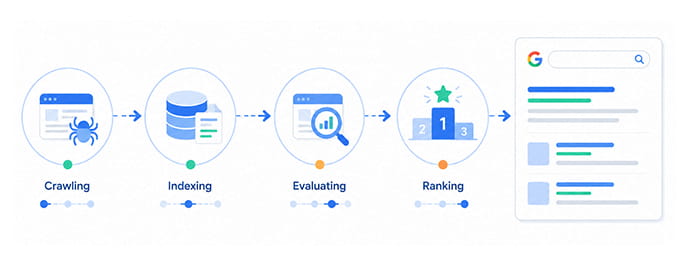
Google describes a process known as query fan-out, in which AI features can issue multiple related searches to gather information covering different parts of a topic. Retrieval systems then identify current and relevant pages from the Search index to support the response.
This means a page may become visible because it answers an important sub-question rather than the broad original query. A well-developed section explaining one specific concept can therefore contribute to an AI response even when the full article covers a wider subject.
The opportunity does not remove the need for crawlability and indexation. Content that Google cannot access or include in its index cannot reliably become a supporting source.
Technical Eligibility for AI Features
Google does not require a special AI schema for inclusion in AI Overviews or AI Mode. The same fundamental requirements apply: Google must be able to crawl the page, index its content and show an eligible search snippet.
Structured data remains useful when it accurately represents visible content and corresponds to a feature Google supports. However, unsupported markup cannot force a page into a generative response.
Google also states that website owners do not need to divide articles into unnaturally small fragments or rely on an llms.txt file to improve visibility in Google Search. Artificial technical shortcuts are less important than accessible, well-structured and useful content.

Creating Content Worth Citing
Generative search increases the importance of non-commodity information. A generic summary can often be recreated without directing users to the original page, while proprietary research, specialist interpretation and first-hand evidence give the source a stronger reason to be surfaced.
Pages should make important claims clear, support them with evidence and explain where their conclusions come from. A concise, quotable statement can be helpful, but it should exist within a complete and trustworthy discussion rather than as an isolated sentence created only for AI extraction.
The goal is not to write for a machine-generated answer. It is to publish information useful enough that both conventional and generative search experiences have a reason to retrieve it.
How to Optimize for Google Algorithms in 2026
Optimizing separately for every component of Google algorithms creates fragmented content and encourages tactical shortcuts. A sustainable strategy focuses on the qualities that remain valuable across different ranking systems: clear intent, original information, technical accessibility, trustworthy evidence and a strong user experience.
The following process connects those principles with practical SEO work.
Start With Search Intent and the Current SERP
Search intent describes what the user is trying to accomplish. Two queries using similar words can require completely different pages when one user wants to learn and another wants to purchase.
Before creating or updating content, examine the current search results. Look at the formats Google prefers, the level of detail offered by leading pages and the presence of videos, products, discussions, local listings or AI features.
The SERP should be treated as evidence of Google’s current interpretation, not as a template to copy. Reproducing the headings of the leading pages may create a complete-looking article without adding anything better.
The stronger approach is to understand the standard established by the current results and then identify what they fail to explain. That gap may involve missing evidence, weak examples, outdated information or a content format that does not fully support the user’s task.
Create a Better Result, Not Merely a Longer One
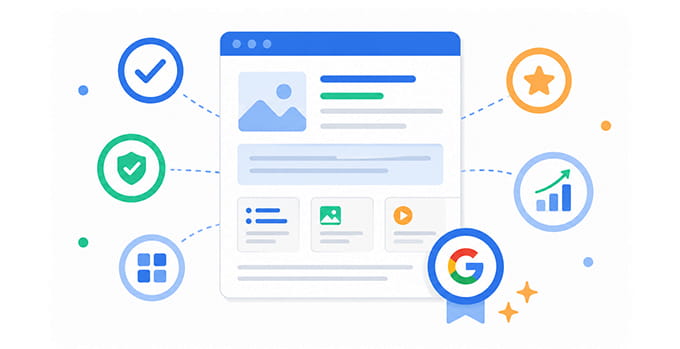
A better page is not automatically a longer page. Google explicitly advises creators to focus on helpfulness and does not provide a preferred word count.
Content should be as detailed as the task requires. A technical guide may need extensive explanation, while a simple definition should not force readers through several thousand words before answering the question.
Quality can come from accuracy, clarity, first-hand evidence, better organization or practical examples. The important test is whether the visitor can complete the intended task without returning to Google because the page omitted essential information.
Every section should earn its place. Adding generic background content merely to increase length can make the article less efficient and reduce the visibility of the information users actually need.
Build Topical Depth Without Creating Duplicate Pages
Topical authority is not created by publishing hundreds of loosely related articles. It develops when a website provides a coherent collection of resources that address distinct needs within an area of expertise.
Each URL should have a defined role. A broad rank-tracking guide can introduce the subject, while separate pages may explain local tracking, mobile-versus-desktop differences or competitor position monitoring. Those pages deserve separate URLs because they support different tasks.
Problems arise when pages exist only because keyword tools display slightly different phrases. Multiple URLs targeting the same intent can compete with one another and make it harder for Google to determine which page should rank.
A clear content architecture combines overlapping pages, differentiates genuinely separate subjects and uses internal links to show how each resource fits into the wider topic.
Demonstrate Genuine Experience
Generic explanations have become easy to produce. First-hand evidence helps distinguish a page from content that merely reorganizes public information.
Experience can be demonstrated through original screenshots, testing methodology, before-and-after examples, failed approaches, measurable results and practical limitations. These details also make the page more useful because they reveal what happens outside an idealized process.
A tutorial written by someone who completed the task should explain the problems encountered along the way. A review should describe how the product was evaluated. A case study should clarify what changed, what remained constant and how the result was measured.
The objective is not to repeatedly claim expertise. It is to make the evidence of that expertise visible within the content.
Strengthen Technical Accessibility
High-quality content can underperform when Google cannot reliably access, render or index it. Technical SEO removes the barriers between the content and the systems that need to process it.
An effective audit should examine robots directives, canonical tags, HTTP status codes, redirect chains, XML sitemaps, internal linking and mobile rendering. It should also identify orphan pages, duplicate titles, broken links and structured data that does not match visible content.
JavaScript can add another layer of complexity when essential information depends on client-side rendering. Google can process JavaScript, but website owners should still confirm that the rendered HTML contains the content and links required for discovery.
Technical SEO does not create authority or search demand by itself. It ensures that valuable pages are not prevented from competing because of avoidable implementation problems.
Find the issues holding your site back before rankings drop
Crawl your website, uncover technical and on-page SEO issues, and see which pages need attention first. SerpVision groups findings by severity so your next SEO sprint starts with the fixes that matter.
No credit card required. Audit on your schedule.
Use Internal and External Links With Purpose
Internal links should guide visitors to the next useful resource and clarify the relationship between pages. Descriptive anchor text gives readers context before they click and helps search systems understand the destination.
Important commercial pages should not remain isolated from relevant educational content. At the same time, every article does not need to link to every product page. The connection should support the user’s current journey.
External links can strengthen a page when they direct readers to primary evidence, official documentation or a source that explains a claim in greater depth. Linking out is not a substitute for original content, but it demonstrates transparency and gives readers a way to verify important information.
Links should exist because they improve the page. Repetitive internal anchors, automated directory submissions and artificial exchanges create activity without necessarily creating value.
Monitor Rankings in Context
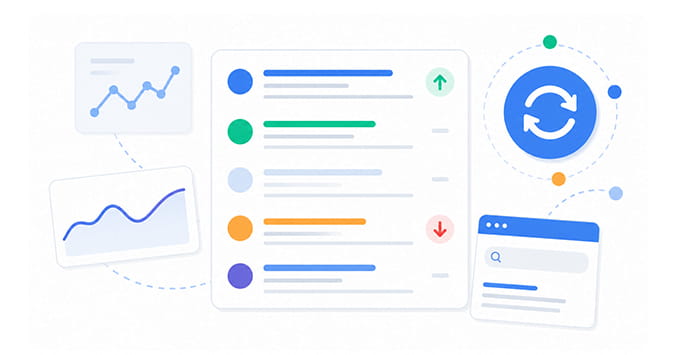
Rank tracking is useful when it identifies patterns rather than encouraging daily reactions to small movements. A single keyword changing by one position may represent normal SERP volatility, while a consistent decline across a topic cluster requires investigation.
Monitoring should separate countries, devices, landing pages and keyword groups. A decline limited to mobile results may indicate a different issue from a loss affecting every market.
Ranking data should also be compared with Search Console impressions and clicks. Positions can remain stable while clicks decline because ads, AI Overviews or other SERP features changed how much attention organic listings receive.
Historical tracking gives SEO teams the context required to determine whether a movement began during an update, followed a website change or reflected a longer competitor trend.
Stop guessing where your pages rank on Google
Track keyword positions across different countries, locations and devices. See ranking changes, uncover new opportunities and react before your competitors do.
No complicated setup. Add your keywords and start tracking.
Compare the Pages That Replaced You
A ranking loss should never be evaluated only by looking at the page that moved down. Search results are comparative, so the pages moving above it often provide the most useful evidence.
Examine whether competitors better match the search intent, provide stronger original evidence or use a format Google now appears to prefer. Review their content depth, internal linking, recent updates, link growth and SERP feature ownership.
The objective is not to copy the winning page. It is to identify the standard it improved and determine whether your page has a genuine weakness.
Sometimes the original page remains accurate and useful, but a competitor has become more complete. In other cases, the SERP has shifted from informational guides toward tools, products or community discussions. The solution depends on which change actually occurred.
Know when competitors move before they take your traffic
Compare your rankings with competing domains on the same keywords. Find the terms where they are pulling ahead, follow their movement over time and turn ranking gaps into a focused SEO action list.
No credit card required. Add the competitors that matter to each project.
What to Do After a Google Core Update
Major changes to Google algorithms, particularly core updates, often create pressure to make immediate changes before enough evidence is available. Rankings may fluctuate during deployment and continue moving as Google processes the update.
Google recommends waiting until the update is complete and then allowing at least one full week before making a detailed comparison. The post-update period should be compared with an equivalent period before the rollout began.
Establish the Correct Timeline and Baseline
Begin with the official Search Status Dashboard rather than third-party volatility reports. Record the exact start and completion dates, then map them against your ranking and traffic data.
The comparison period should account for seasonality, weekdays and abnormal campaigns. Comparing a holiday period with an ordinary week can create the impression of an algorithmic loss when demand simply changed.
Minor position changes rarely justify rebuilding a successful page. A sustained decline from the first page to much lower positions deserves more investigation than movement from position two to position four.
The goal of the baseline is to establish whether the update produced a material and persistent change rather than temporary volatility.
Segment the Impact Before Looking for Causes
Site-wide averages can hide the true pattern. Divide the data by landing page, query group, topic, country, device and search type.
A decline affecting one topic cluster suggests a different problem from a domain-wide loss. Similarly, a mobile-only decline should be investigated separately from movement appearing on both desktop and mobile.
Branded and non-branded searches should also be separated. A change in brand demand can affect traffic without indicating that Google reassessed the quality of the website’s informational content.
Segmentation narrows the investigation. Instead of asking why the entire site lost traffic, the team can identify the exact pages, audiences and search journeys that changed.
Identify the Competitors That Gained
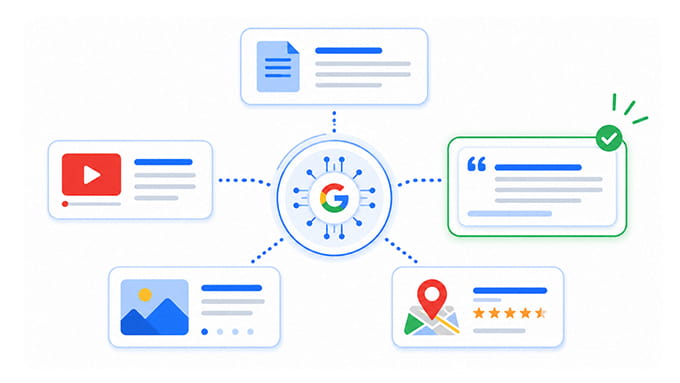
Ranking losses become more understandable when the replacement pages are known. Track which domains gained across the same queries and determine whether the change is consistent.
Compare search intent, content structure, originality and trust. A newer page does not necessarily win because of its publication date; it may provide evidence or a format that better satisfies the query.
Look beyond written content. Google may have begun favoring product pages, videos, forums or local results for searches previously dominated by guides.
Competitor analysis converts a vague algorithm concern into a practical comparison between available results.
Rule Out Technical Problems
An update can overlap with technical changes that have nothing to do with Google’s new ranking systems. Review deployments, migrations and template changes made around the same period.
Check whether affected pages gained accidental noindex directives, incorrect canonical tags or redirect errors. Confirm that their primary content appears in the rendered mobile version and that important internal links remain accessible.
Server instability, security incidents and changes to JavaScript rendering can also reduce visibility. Technical causes should be investigated before assuming that content quality was reassessed.
A crawl and indexing review provides a faster explanation when the problem involves accessibility rather than relevance.
Make Meaningful Improvements Instead of Quick Fixes
Google advises against making drastic changes based only on speculation. Improvements should address weaknesses that would matter to a real visitor even without an algorithm update.
A meaningful update may clarify confusing explanations, add original evidence, consolidate duplicate pages or improve the content’s alignment with current intent. It may also strengthen authorship, navigation or technical accessibility.
Changing dates, adding unnecessary paragraphs and repeating keywords are not meaningful improvements. They alter the page without increasing its usefulness.
Deleting content should generally be a final option reserved for pages that have no valuable purpose and cannot reasonably be improved or combined with a stronger resource.
Allow Time for Reassessment
Some changes may affect visibility after Google recrawls and reindexes the page, while broader quality reassessments may take longer. Google states that improvements can take several months to be recognized.
Recovery does not always require waiting for another announced core update because smaller changes to core systems happen continuously. However, no individual improvement guarantees that a previous position will return.
SEO teams should monitor the affected groups over time and evaluate whether the changes improved engagement, indexation and search visibility rather than checking one keyword immediately after publication.
A Practical Framework for Diagnosing Ranking Drops
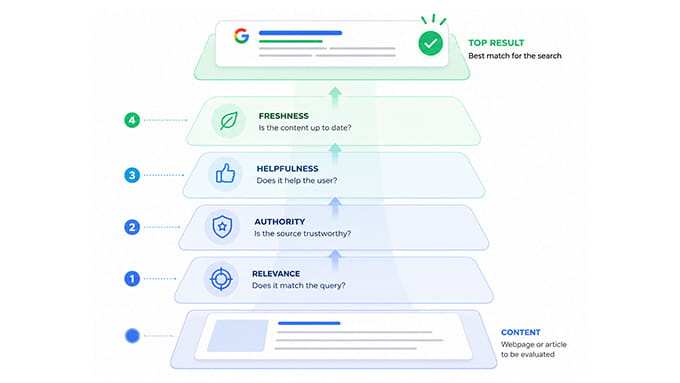
A traffic decline can result from ranking changes, lower search demand, technical problems or a different SERP layout. Google recommends using Search Console and demand data to distinguish between these possibilities.
The visible pattern usually determines which investigation should happen first.
Rankings and Impressions Declined Together
When both positions and impressions fall, the page may have lost visibility across relevant searches. The cause could involve competitor gains, changed intent, indexation problems or a broader quality reassessment.
Begin by identifying which queries and URLs account for most of the loss. Then compare those results with ranking history and the update timeline.
A decline concentrated in one topic suggests that the investigation should focus on those pages and competitors rather than the entire domain.
Rankings Remained Stable but Clicks Declined
Stable positions with fewer clicks often indicate a change in click-through rate rather than traditional ranking loss.
The SERP may now contain more ads, an AI Overview, a featured snippet or another element that captures attention before the organic result. Competitors may also have improved their titles and snippets.
Inspect the live search results and compare impressions with clicks. Rewriting the whole article may be unnecessary when the main problem is presentation or reduced organic opportunity.
One Topic Declined but the Rest of the Site Remained Stable
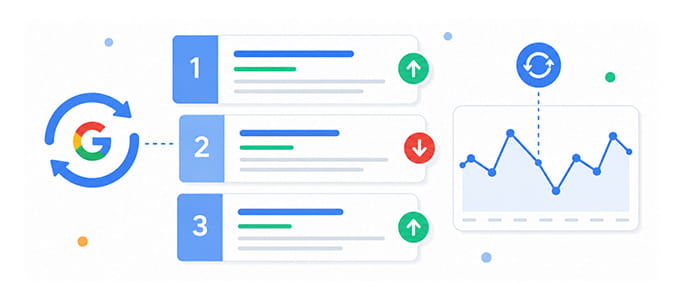
Topic-specific losses can indicate an intent shift, content gap, cannibalization or stronger competition within that subject.
Review all pages within the cluster to determine whether several URLs target the same search. Compare the competing websites that gained and evaluate whether they provide a more suitable format.
Because the rest of the domain remains stable, a broad technical or site-wide penalty is less likely than a localized content problem.
Visibility Declined Across the Entire Website
A domain-wide loss requires a wider investigation. Major technical problems, migrations, security incidents, spam-policy issues or substantial template changes can affect many pages at once.
Check Search Console for manual actions, security warnings and indexing changes. Review server availability, robots directives, canonical patterns and recent deployments.
A broad decline can also result from a core-system reassessment, but technical and security causes should be ruled out before content is rewritten across the site.
Only Mobile Rankings Declined
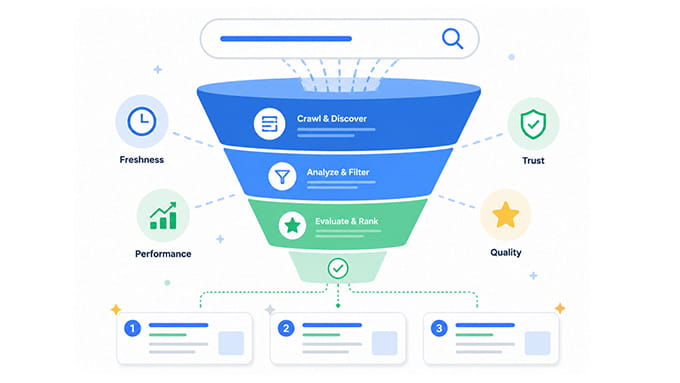
Google uses the mobile version of a page for indexing and ranking. Differences between mobile and desktop content can therefore create serious visibility problems.
Confirm that mobile users and Googlebot can access the same primary content, headings, metadata and internal links. Also review responsive layouts, intrusive overlays and rendering errors.
Device-specific SERP changes can affect rankings as well, so the live mobile results should be compared with desktop before assigning a technical cause.
Final Thoughts
Google algorithms are complex, but a durable SEO strategy does not need to chase every individual system or rumored ranking factor.
Google is becoming better at interpreting concepts, identifying original information and filtering content created mainly to manipulate visibility. AI Overviews and AI Mode are also expanding the ways users discover sources, but they continue to depend on the foundations of Search.
The most defensible strategy is to create pages that deserve to be retrieved. They should satisfy a clear user need, provide evidence that competitors cannot easily reproduce and remain accessible to both users and search engines.
Technical auditing, rank tracking and competitor analysis support this strategy by replacing assumptions with evidence. They show whether a decline comes from accessibility, changing SERPs or a competitor that has genuinely created a stronger result.
Google algorithms will continue to evolve, but content built around usefulness, trust and original value is more likely to remain competitive after future updates. Content built around usefulness, trust and original value is far more likely to remain valuable after the next update.
Join the conversation
Share your question, add a practical note, or continue the discussion below.
No comments yet
Be the first to add a thought to this article.