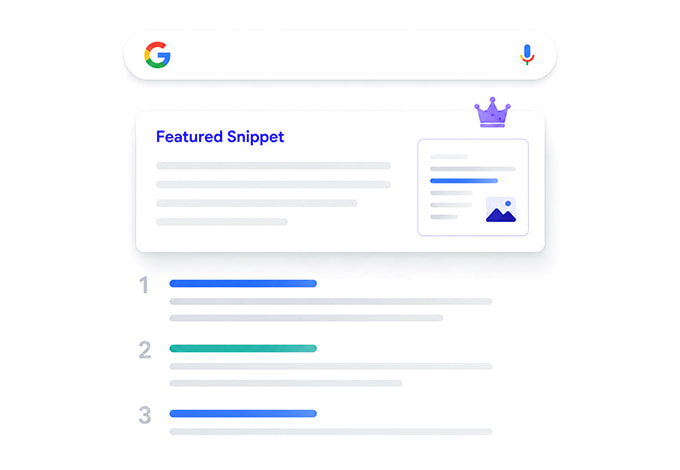
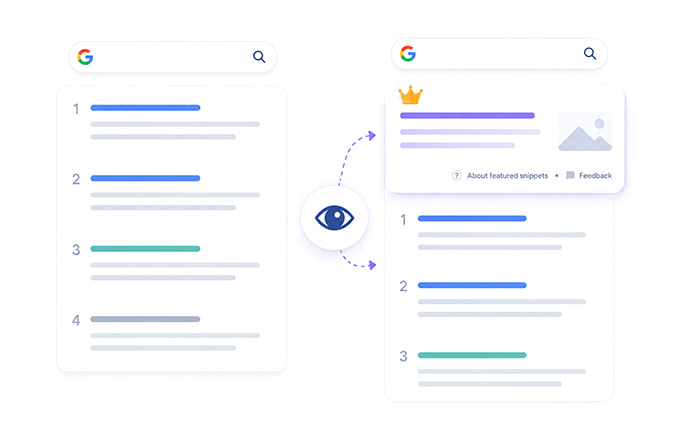
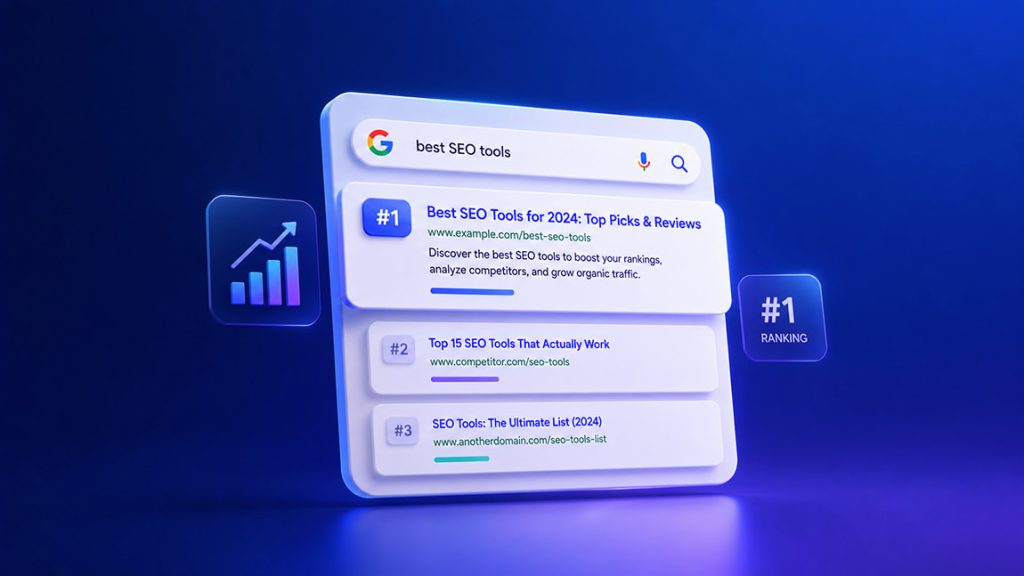
The phrase Position Zero is still commonly used to describe this appearance because featured snippets have historically been displayed above the first traditional organic listing. However, it is better to treat Position Zero as an informal SEO term rather than a fixed Google ranking position. Modern search results can contain advertisements, AI Overviews, local results, product modules, related questions, and other elements, so the precise visual location of a featured snippet can vary.
A featured snippet is also not something a publisher can request, mark up, or guarantee. Google automatically determines whether a query would benefit from a highlighted answer, which page provides a suitable response, and what portion of that page should be displayed. Google describes featured snippets as special search boxes in which the normal result format is reversed, with the descriptive snippet appearing before the source link. These answers may also appear within People Also Ask results rather than only at the top of the page.
This guide explains how featured snippets work in 2026, which content formats are commonly selected, what actually improves eligibility, and how to build pages that remain useful even when Google does not choose them for a highlighted result.
What Is a Google Featured Snippet?
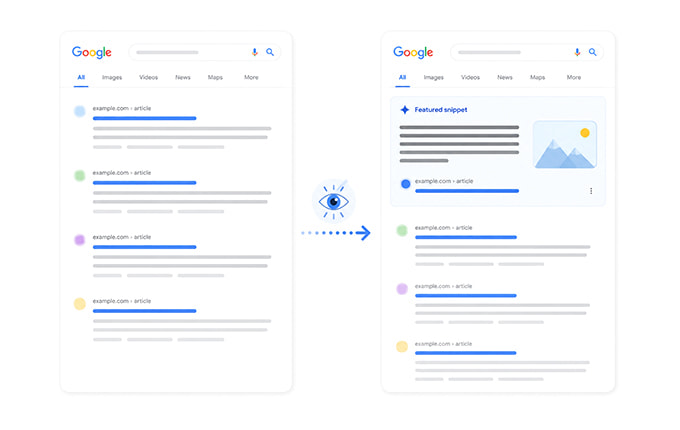
A Google featured snippet is an extracted passage from a webpage that is displayed prominently within the search results. Instead of showing the page title first and the description underneath, Google presents the selected answer before the source link, making the response easier to notice and scan.
The extracted content may contain a paragraph, a sequence of steps, a list, a table, or another format that fits the query. Google may also include an image, although the image and written answer do not always come from the same page.
Featured snippets are most common when a user is searching for a definition, explanation, comparison, process, calculation, or direct answer. Queries beginning with terms such as “what is,” “how to,” “why does,” “how many,” and “what is the difference between” frequently create situations where a concise extracted answer could be useful.
A page does not need to rank first organically before it can be selected. Google evaluates whether the content is suitable for the highlighted answer, although the page still needs to be indexed and considered relevant to the search. The visibility of the snippet can therefore be different from the page’s conventional organic position.
Is Position Zero Still a Useful Term in 2026?
Position Zero remains a recognizable SEO expression, but it no longer describes every search result accurately. Search pages have become more dynamic, and a featured snippet may appear beneath advertisements, alongside other modules, or inside a People Also Ask section.
Google itself refers to the feature as a featured snippet, not Position Zero. Using the official name is therefore more precise when discussing performance, documentation, or implementation.
This distinction matters because SEO teams can make poor decisions when they treat Position Zero as a guaranteed location above every other result. A page may earn a featured snippet and still compete with an AI Overview, sponsored results, or other visually prominent features.
The correct question is not whether a page has technically reached “position zero.” The more useful question is whether the page has gained additional visibility for an important query and whether that visibility produces relevant visits, brand exposure, or conversions.
How Featured Snippets Work
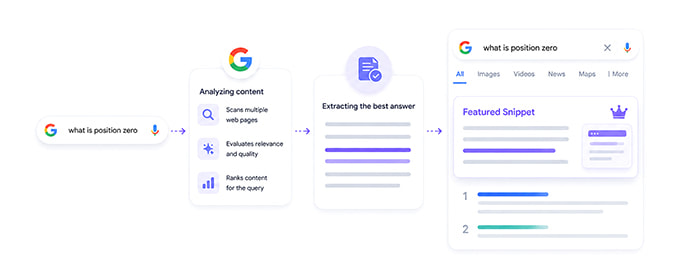
Google selects featured snippets automatically from pages that are already available in its search index. Publishers cannot submit a page to a dedicated featured snippet system, and there is no special schema type that instructs Google to use a particular paragraph.
When Google determines that an extracted answer could help the user, its systems identify content that appears relevant, clear, and suitable for presentation in a compact format. The selected wording may come directly from a paragraph, list, table, or another visible section of the page.
The content shown can change without the page owner modifying the article. Google may choose a different passage, replace the source page, stop showing the feature, or remove the featured snippet entirely if the results page changes.
A featured snippet should therefore be viewed as a search appearance rather than a permanent ranking asset. Earning it once does not mean the page will retain it indefinitely, particularly when competitors improve their content or the dominant search intent changes.
Featured Snippets and AI Overviews
Featured snippets and AI Overviews are different search features, although both can provide users with information before they visit a website.
A featured snippet typically extracts a specific passage from one page and presents that passage with a source link. An AI Overview may synthesize information related to a more complex question and provide several supporting links.
Google states that the same foundational SEO principles continue to apply to AI Overviews, AI Mode, and traditional Google Search. There are no additional technical requirements, dedicated AI files, or special structured data types required for inclusion in Google’s AI search features.
This is relevant to featured snippet optimization because the strongest strategy is not to create separate content for every possible search feature. A technically accessible, clearly structured, original, and trustworthy page can support visibility across conventional results, featured snippets, related questions, and AI-powered search experiences.
What Types of Featured Snippets Can Appear?
The format selected by Google generally reflects the structure of the answer and the nature of the query. A page should not force information into a particular format merely because that format is associated with featured snippets. The content should use the structure that communicates the answer most effectively.
Paragraph Featured Snippets
Paragraph snippets are commonly used for definitions, explanations, and direct questions. Google extracts a short passage that answers the query and presents it before the page link.
A strong paragraph answer normally begins with a clear explanation rather than a long introduction. The first sentence should establish the meaning of the subject, while the following sentences provide enough context to make the answer accurate.
There is no official rule requiring a paragraph to contain a specific number of words or characters. Recommendations that every snippet answer must be exactly 40, 50, or 60 words should be treated as rough observations rather than Google requirements.
The objective is to provide a complete answer that can be understood independently without becoming so long that the main point is difficult to identify.
List Featured Snippets
List snippets are useful when the answer naturally contains steps, stages, ingredients, requirements, or ranked items.
An ordered list may be appropriate for a process in which the sequence matters, such as configuring a tool or completing a technical task. An unordered list may be more suitable when the items belong to the same group but do not need to be followed in a specific order.
The list should be supported by detailed explanations in the article. Publishing only a short collection of items may give Google something easy to extract, but it may not provide readers with enough information after they visit the page.
A useful structure introduces the process, presents the list, and then explains each step in more detail under descriptive subheadings.
Table Featured Snippets
Tables can be effective for comparisons, specifications, pricing differences, measurement conversions, and other information that is easier to understand in rows and columns.
The table should use actual HTML table elements rather than an image containing text. Clear column headings and concise cells make the information easier for users, screen readers, and search systems to interpret.
Tables should not be added solely to create a snippet opportunity. If the information requires long explanations or does not compare consistent attributes, forcing it into a table can reduce clarity.
A short summary before the table and an explanation after it can help readers understand the comparison and any limitations that affect the data.
Video and Visual Answers
Some queries are easier to satisfy through demonstration than text. Google may display video-related results or highlight a relevant moment from a video when users are looking for instructions, repairs, software walkthroughs, or other visual processes.
A page containing a video should still include useful written context. The title, surrounding text, transcript, headings, thumbnail, and video metadata can help users and search engines understand what the video covers.
The visual content should be central to the answer rather than included as decoration. A short, clear demonstration supported by explanatory text is more useful than an unrelated embedded video added only for SEO.
Why Featured Snippets Matter for SEO
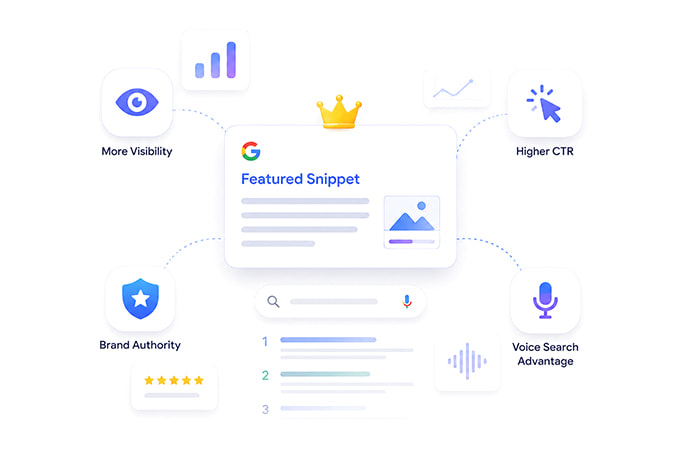
Featured snippets can increase the visual presence of a page by placing part of its content in a highlighted search element. This can help a brand become more noticeable, particularly when competing pages have similar conventional listings.
However, a featured snippet does not guarantee higher traffic. Some users may receive enough information from the extracted answer and decide not to visit the page. In other cases, the snippet creates interest and encourages the user to click for examples, instructions, evidence, or deeper explanation.
This is why claims that featured snippets always produce a fixed percentage increase in CTR are unreliable. Performance depends on the query, the answer format, the surrounding search features, the wording selected by Google, the page’s brand recognition, and the amount of information users still need.
The commercial value also varies. A featured snippet for a broad definition may produce many impressions but limited conversions, while a snippet answering a practical question near a purchase decision may attract fewer visitors with stronger intent.
Featured snippet performance should therefore be evaluated using impressions, clicks, conversions, assisted conversions, and the importance of the query to the business rather than visibility alone.
Can You Guarantee a Featured Snippet?
No page owner, agency, content writer, or SEO tool can guarantee that Google will display a page as a featured snippet. Google controls whether the feature appears, which source is selected, how much content is extracted, and when the result changes. Even a page that follows every relevant best practice may never receive the feature.
This does not mean optimization is pointless. It means the goal should be to improve eligibility and usefulness rather than promise a result that remains outside the publisher’s control.
A strong page should still provide value if Google displays it as a standard organic result. Creating thin content designed only for extraction can leave the page weak when no snippet is shown.
How to Find Featured Snippet Opportunities
Featured snippet research should begin with queries that matter to the website’s audience rather than with random questions selected only because they display a highlighted answer.
Review Existing Rankings
Pages that already rank for relevant queries are often the most practical starting point. If a page appears on the first search results page but another source owns the featured snippet, the existing page may already have enough relevance to compete after a focused improvement.
Review the query, the current featured answer, and the section of your page that addresses the same need. Determine whether your answer is less direct, less complete, outdated, or difficult to identify.
The objective is not to copy the current snippet. You should understand what the search requires and create a clearer response supported by stronger context.
Use Search Console Query Data
Google Search Console can reveal queries for which a page already receives impressions. These terms are valuable because they show how Google currently connects the page with user searches.
Look for question-based queries, comparisons, definitions, and instructional searches that match the page’s purpose. A query with moderate impressions and a strong average position may offer a more realistic opportunity than a broad keyword for which the site has little existing visibility.
Search Console does not provide a dedicated report showing every featured snippet owned by a site. Position data should therefore be combined with manual SERP review or a rank tracking platform capable of recording search features.
Analyze People Also Ask
People Also Ask results can reveal related questions that users may ask during the same search journey. Featured answers can appear inside these groups, which makes them useful for understanding how Google divides a topic into subquestions.
Not every question should be added to the same page. Some are closely connected to the main intent and deserve a dedicated section, while others belong to separate supporting articles.
The decision should depend on whether answering the question improves the page for its intended reader. Adding unrelated questions solely to increase keyword coverage can make the content repetitive and unfocused.
Compare Competitor Answers
When another page owns the featured snippet, examine the exact section from which Google appears to be extracting the answer. Review the heading, answer format, surrounding explanation, publication date, evidence, and overall page quality. Determine whether the answer is genuinely strong or merely the clearest option currently available.
A competitor’s weakness may involve outdated information, missing conditions, vague language, unsupported claims, or a lack of practical examples. Addressing these weaknesses can create a better resource without imitating the competitor’s wording.
How to Optimize Content for Featured Snippets in 2026
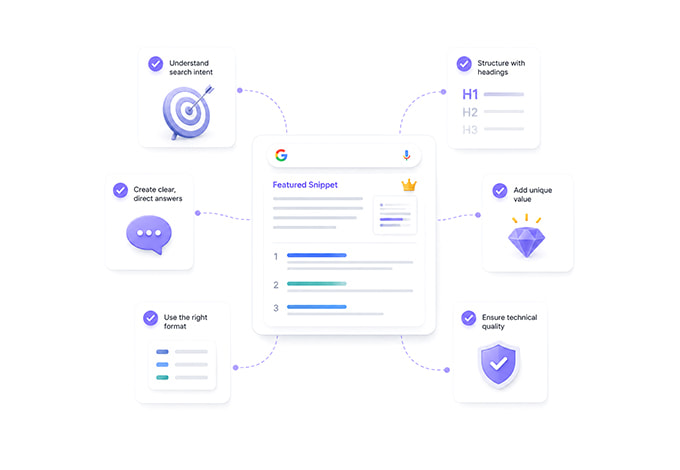
Featured snippet optimization should begin with the user’s question and the quality of the full page. The extracted answer is only one part of the experience. Once the user clicks, the article must provide the detail, evidence, and next steps that the small search result could not contain.
Match the Search Intent Precisely
The page must address the same need represented by the query. A detailed informational article is unlikely to win a snippet for a query where users clearly want a product category, local business, or interactive tool.
Review the search results and identify the page formats Google currently prefers. If tutorials dominate, the user probably needs instructions. If comparisons and tables are common, the user may be evaluating options.
The content format should reflect that intent before any individual paragraph is optimized.
Place a Clear Answer Near the Relevant Heading
A descriptive H2 or H3 should introduce the question, followed by a paragraph that answers it directly. The opening sentence should provide the central answer without forcing the reader through background information first. The following sentences can define important conditions, clarify exceptions, and explain why the answer matters.
This structure helps readers scan the page and allows an individual passage to make sense when Google extracts it. The rest of the section should then expand the answer with examples, evidence, instructions, or comparisons. The goal is to provide both a concise summary and a complete explanation.
Use Natural Question-Based Headings
Headings should describe what each section explains. A question format can be useful when it matches the way people search, but every heading does not need to be written as a question.
A heading such as “How Featured Snippets Work” is clearer than a vague label such as “More Information.” Similarly, “Can Structured Data Create a Featured Snippet?” communicates a specific purpose.
Headings should not become a container for multiple awkward keyword variations. Natural language is easier to understand and creates a better reading experience.
Choose the Right Answer Format
The answer should use the format that best fits the information. Definitions and explanations generally work well as paragraphs. Processes may require numbered steps. Comparisons may benefit from tables, while a set of related factors may be easier to understand as a short list.
The format should be selected for clarity rather than because an SEO study suggested that one type appears more often. A page can also contain several formats when the subject requires them. For example, an article may begin with a definition, include a comparison table, and later present a step-by-step process.
Provide More Value Beyond the Extracted Answer
A featured snippet gives users only a limited view of the page. The article should provide a clear reason to continue reading.
Useful additional value may include original screenshots, practical examples, a template, a calculator, expert commentary, limitations, case studies, or detailed instructions.
Google’s current content guidance recommends creating people-first material that demonstrates knowledge, leaves users feeling that they have achieved their goal, and adds value beyond summarizing what others have already published.
This is especially important in 2026, when generic answers can be produced and repeated easily. Pages need a reason to exist beyond presenting information that appears identically across dozens of competitors.
Demonstrate Experience and Trust
A concise answer may earn attention, but users still evaluate whether the source is reliable. Use accurate bylines, author profiles, relevant qualifications, transparent sourcing, and clear update dates. When the article includes an experiment, benchmark, or test, explain how the information was produced.
Google’s people-first content guidance encourages publishers to make it clear who created the content, how it was produced, and why it exists. It also notes that trust is the most important aspect of E-E-A-T.
For technical, financial, medical, or other high-impact topics, unsupported answers can damage both user trust and search performance.
Keep Important Content in HTML Text
The answer should be available as visible text on the page rather than embedded only inside an image, video, canvas element, or script that may be difficult to process. Images and videos can support the explanation, but the essential answer should remain available in textual form.
Use semantic HTML for paragraphs, headings, lists, and tables. This improves accessibility and makes the page structure easier to understand.
Overcomplicated layouts and excessive JavaScript can make valuable information less accessible even when the page appears visually attractive.
Improve Page Experience
Featured snippet eligibility does not remove the need for a good page experience. The page should load reliably, work on mobile devices, remain readable, and avoid intrusive elements that interfere with the main content.
Google recommends evaluating page experience as a whole rather than focusing on one isolated metric. A fast page with poor navigation is not a good experience, nor is a visually attractive page that hides the answer behind aggressive popups.
Readers who click a featured snippet expect to reach the section that continues the answer. Clear navigation, descriptive headings, and a useful table of contents can help them find the relevant information quickly.
Build Context Through Internal Links
Internal links help users move from a concise answer to related explanations and help search engines understand the relationship between pages. A page about featured snippets can naturally link to guides about SERP features, SERP analysis, keyword research, rank tracking, and search visibility.
Anchor text should describe the destination rather than rely on vague wording such as “click here.” Internal links should support the reader’s next question. Adding unrelated links merely to distribute authority can make the article distracting and less useful.
Stop guessing where your pages rank on Google
Track keyword positions across different countries, locations and devices. See ranking changes, uncover new opportunities and react before your competitors do.
No complicated setup. Add your keywords and start tracking.
Update Content When the Information Changes
An existing page may lose a featured snippet when its answer becomes outdated, incomplete, or less relevant than a competitor’s explanation. Review pages covering fast-changing subjects and update them when the underlying information changes. The revision should improve the content rather than simply replace the publication date.
Google specifically warns against changing page dates to create the appearance of freshness when the content has not been substantially updated.
When making an update, review the answer, examples, links, screenshots, and supporting evidence. A genuinely refreshed page should give readers information they could not obtain from the older version.
Does Structured Data Help You Get a Featured Snippet?
Structured data can help Google understand certain types of page information and can make pages eligible for supported rich results. However, there is no dedicated featured snippet schema that guarantees or directly creates a featured snippet.
Publishers should use structured data only when it accurately represents visible content and matches a feature supported by Google. Google recommends relying on Search Central documentation for the requirements that apply to Google Search and testing implementations with the Rich Results Test.
Adding FAQ, HowTo, Article, or other schema types does not automatically make a page eligible for a featured snippet. These formats serve different purposes and should not be presented as a shortcut to Position Zero.
The most important factors remain a relevant page, accessible content, a clear answer, and sufficient value for the user.
Do Backlinks Help Featured Snippets?
Backlinks can support a page’s wider organic visibility and help search engines discover and evaluate content, but they do not directly instruct Google to create a featured snippet.
A page usually needs enough relevance and overall search visibility to become a realistic candidate. Strong links may contribute to that broader competitiveness, particularly for difficult topics.
However, a page with many links can still lose the snippet to a clearer and more useful answer. Conversely, a focused page from a smaller website may be selected when it provides a better passage for the specific query.
Link building should therefore support the quality and discoverability of the page rather than be treated as a featured snippet formula.
Do Social Signals Help You Win Position Zero?
Social shares, likes, and comments should not be presented as a direct method for earning a featured snippet.
Social promotion can help more people discover a page, which may indirectly lead to links, mentions, feedback, and a larger audience. These outcomes can support content distribution and brand growth. However, encouraging shares or adding interactive elements does not create a direct technical path to Position Zero.
The article itself still needs to satisfy the query, provide a clear answer, and compete successfully in organic search.
Can You Control Whether Google Uses Your Content?
Website owners can limit or prevent Google from using page content in search snippets.
The nosnippet robots directive prevents both regular and featured snippets from being shown for the page. The data-nosnippet attribute can exclude selected portions of visible content from regular and featured snippets while allowing other parts of the page to remain eligible.
Google also supports max-snippet, which allows a publisher to specify a maximum text length. A value of zero has the same effect as nosnippet, while a value of minus one allows Google to choose the length it considers most useful.
These controls should be used carefully. Restricting snippets may reduce the amount of information Google can display for the page and can also affect eligibility in AI-powered search features, because Google requires pages used as supporting links in AI Overviews or AI Mode to be eligible for a search snippet.
How to Measure Featured Snippet Performance
Winning a featured snippet should be treated as the beginning of an analysis rather than the final goal. Track the keyword, landing page, search feature, impressions, clicks, CTR, and conversions before and after the change. The comparison should cover a meaningful period because daily results can fluctuate.
Review the full SERP rather than assuming the snippet caused every movement. A change in advertisements, an AI Overview, a People Also Ask section, or competitor listings may influence visibility at the same time.
Google Search Console provides impression, click, CTR, and average position data, but the interface does not isolate all featured snippet appearances as a separate performance category. A rank tracking system that records SERP features can provide additional context.
SerpVision can help teams connect keyword movement with landing pages, competitor positions, devices, countries, and Search Console performance. This makes it easier to see whether a featured snippet gain produced a meaningful improvement or simply changed the way the result appeared.
Common Featured Snippet Mistakes
Many pages fail to compete for featured snippets because they make the answer difficult to identify. A long introduction, vague heading, or paragraph filled with background information can prevent both users and search systems from finding the central response quickly.
Another common mistake is copying the current featured snippet and rewriting it with minor wording changes. This adds little value and may introduce copyright or quality concerns.
Publishers also weaken pages by forcing every section into short, robotic sentences. Concise answers are useful, but the surrounding article should still read naturally and provide complete explanations.
Keyword stuffing creates a similar problem. Repeating phrases such as “featured snippet,” “Google featured snippet,” and “Position Zero” unnaturally does not improve the answer and can make the page less trustworthy.
Finally, some pages are built entirely around snippet extraction and offer no reason to click. A better approach is to answer the immediate question clearly while reserving deeper examples, tools, comparisons, and practical guidance for the full page.
A Practical Featured Snippet Workflow
A reliable workflow begins by identifying a valuable query for which your page already has relevance. Review the current result, determine the format Google is displaying, and examine what the selected answer does well.
Next, evaluate your page from the reader’s perspective. Confirm that the relevant heading is clear, the answer appears immediately below it, and the wording is accurate enough to stand alone.
Choose a paragraph, list, or table based on the nature of the information. Do not force the content into a format that reduces clarity.
Expand the section with original examples, supporting evidence, limitations, and practical next steps. The extracted answer should function as the summary, while the full article provides the complete solution.
After publishing the update, request reindexing only when appropriate and allow time for Google to recrawl and reassess the page. Monitor the query, competitors, SERP layout, impressions, clicks, and conversions.
If the page does not win the snippet, review whether the issue is relevance, page format, answer clarity, authority, or a change in search intent. Avoid repeatedly rewriting the paragraph without understanding the wider results page.
Final Thoughts
Google featured snippets can provide valuable search visibility, but they should not be treated as a guaranteed traffic shortcut or a separate ranking system that can be manipulated with one technical trick.
The most effective approach is to identify questions that matter to your audience, provide a clear answer in the appropriate format, and support that answer with original and trustworthy information.
A page should remain valuable whether Google displays it as a featured snippet, a conventional organic result, a supporting link in an AI Overview, or another search feature.
When concise answers, strong page structure, technical accessibility, relevant internal links, and genuine expertise work together, the page has a better chance of earning prominent visibility while still delivering a satisfying experience after the user clicks.

Join the conversation
Share your question, add a practical note, or continue the discussion below.
No comments yet
Be the first to add a thought to this article.