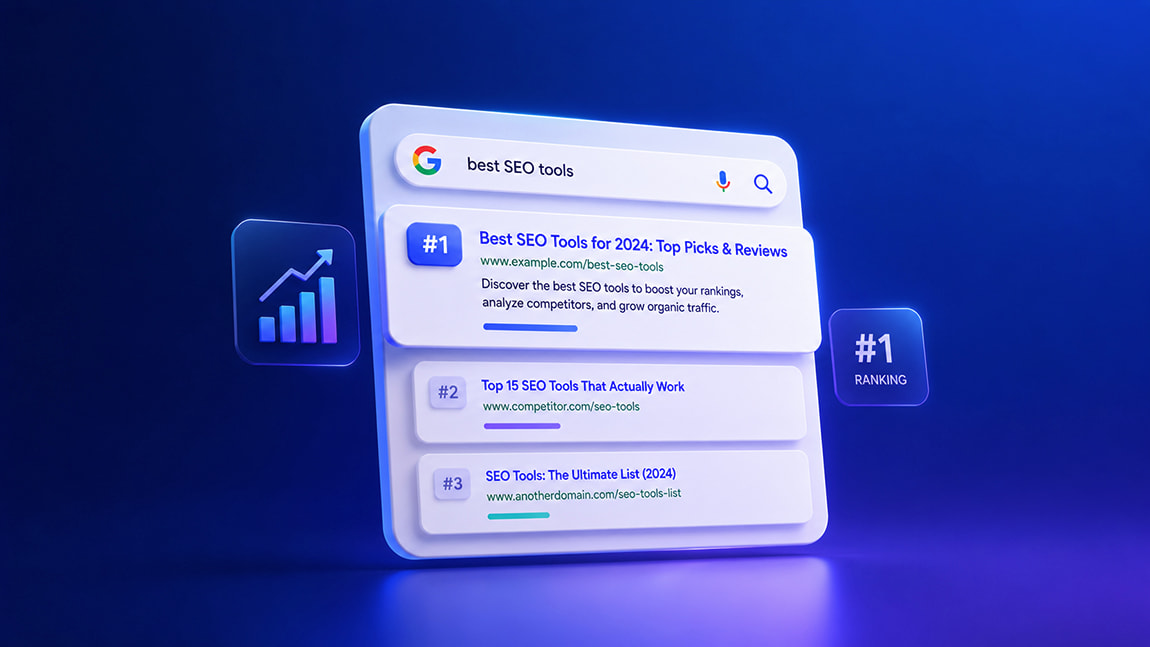
SERP analysis is the process of examining that environment before creating, updating, or evaluating content. It helps SEO teams move beyond isolated keyword metrics and understand the context in which a page must compete, including search intent, page type, competitor strength, SERP features, and real click potential.
A thorough analysis should lead to a practical decision. It should help determine whether the keyword is worth targeting, which type of page should be created, what competing pages do well, which gaps remain unresolved, and how success should be monitored after publication. This guide explains how to perform a SERP analysis step by step while keeping search intent, competitors, content quality, and realistic organic opportunity at the center of the process.

What Is SERP Analysis?
SERP analysis is the process of reviewing the pages, domains, features, and search patterns that appear for a particular query. The purpose is not simply to record which page holds each position, but to understand why certain formats and sources are visible and what that means for your own SEO strategy.
A useful SERP analysis examines the complete results page, including dominant search intent, page types, competitors, content structures, publication dates, result features, and the visual position of organic listings. This creates a more accurate view of the competitive environment than keyword metrics alone can provide.
SERP analysis can be performed before creating a new page, when updating an existing page, or after a ranking or traffic change. Before publication, it helps shape the content strategy; after publication, it helps explain performance and identify whether the competitive environment has changed.
SERP Analysis vs Keyword Research
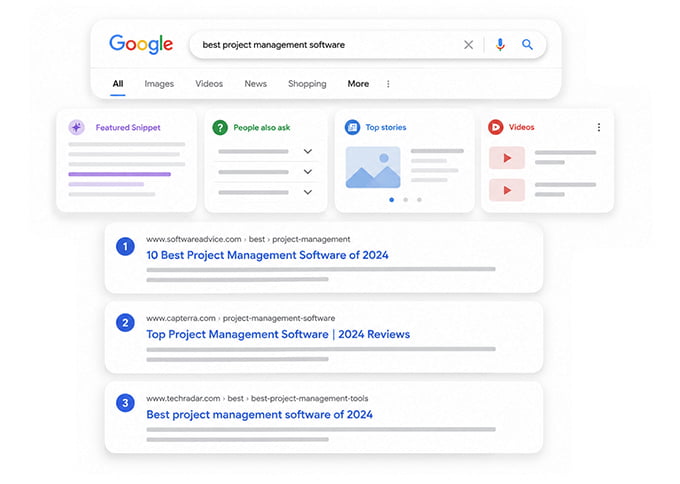
Keyword research and SERP analysis are closely related, but they answer different questions. Keyword research helps identify what users search for and provides estimates related to demand, competition, and relevance, while SERP analysis examines how Google currently responds to that demand.
A keyword tool may show that a phrase receives thousands of searches each month, but the SERP may reveal that most attention is captured by advertisements, maps, products, or an AI-generated answer. Similarly, a keyword difficulty score may appear high because authoritative domains rank for the term, but the results may still contain several page types and a clear opportunity for a more focused resource.
Keyword research identifies possible topics, while SERP analysis helps decide what to do with them. The strongest SEO planning process uses both: keywords provide the initial opportunity set, and the SERP provides the context needed to prioritize and execute those opportunities effectively.
Stop guessing where your pages rank on Google
Track keyword positions across different countries, locations and devices. See ranking changes, uncover new opportunities and react before your competitors do.
No complicated setup. Add your keywords and start tracking.
Why SERP Analysis Matters for SEO
Publishing content without examining the existing results can lead to a mismatch between the page and the search intent. A comprehensive article may fail when Google prefers product categories, a product landing page may struggle when the query is dominated by educational guides, and a national page may be unsuitable when the SERP prioritizes local businesses.
SERP analysis reduces these mistakes by showing what types of pages currently satisfy the query. It also helps identify the real search competitors, which may include publishers, marketplaces, forums, documentation sites, video platforms, or review websites rather than only direct business rivals.
This process also improves performance interpretation. A page can lose traffic without losing its organic position if a new feature appears above it, and another page can lose rankings because the search intent has shifted. Without reviewing the full results page, both situations may be incorrectly treated as a simple content quality problem.
Define the Search Context Before You Begin
A SERP analysis is only useful when the conditions of the search are clearly defined. Results can vary by country, language, city, device, and search engine, so an analysis performed in the wrong environment may not represent the experience of the target audience.
Before reviewing the results, record the target market, preferred language, device type, and date of the analysis. For local SEO, the city or geographic area should also be defined, because a broad country-level result may not reflect the businesses shown to users within a specific service area.
Desktop and mobile results should be reviewed separately when the query is important. The same organic pages may appear on both devices, but the visual prominence of ads, local packs, videos, AI answers, and other features can be very different. Using consistent conditions also makes historical comparison more reliable because it becomes easier to see whether the SERP itself changed.
How to Perform SERP Analysis Step by Step
SERP analysis works best when it follows a clear process rather than a quick glance at the top results. The goal is to move from search context to search intent, then from competitors and page formats to content gaps, click potential, and a practical content decision.
Each step should answer a specific question about the keyword opportunity. By the end of the process, you should know whether the keyword is worth targeting, what type of page should be created, what competitors are doing well, and what your page must do differently to deserve visibility.
Step 1: Identify the Dominant Search Intent
The first stage of SERP analysis is determining what users are most likely trying to accomplish. The keyword itself provides clues, but the existing results usually offer stronger evidence because they show how Google currently interprets the query.
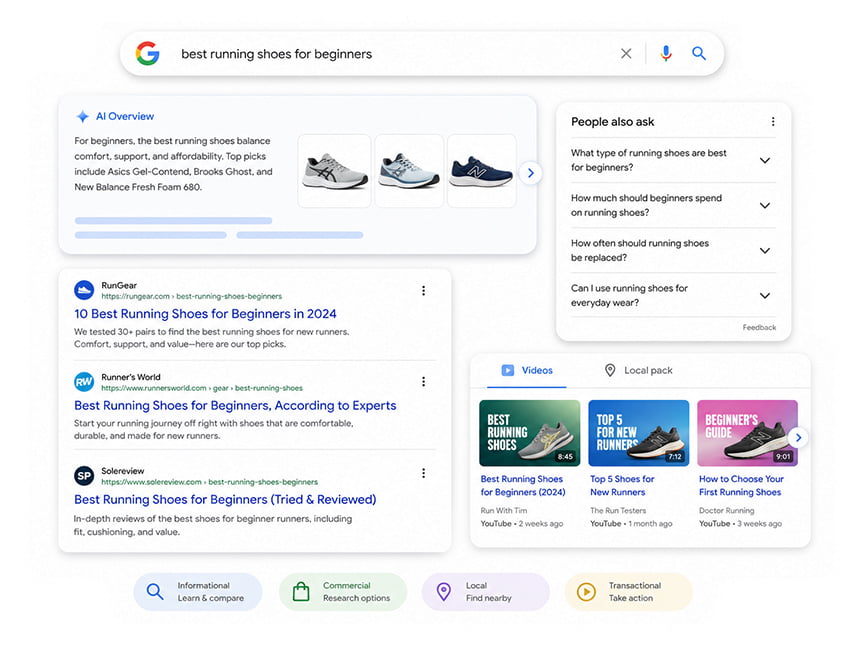
If the top results are detailed guides, tutorials, and definitions, the query is probably informational. If product and category pages dominate, the search is more likely transactional, while comparison articles, reviews, and “best” lists often indicate commercial investigation. Maps and nearby businesses usually reveal local intent.
Some queries have mixed intent. A software-related keyword may display product landing pages, comparison articles, reviews, videos, and educational content at the same time. When the SERP is mixed, the objective is not to force the query into one category, but to determine which intent appears strongest and which part of the SERP is most relevant to your business.
The page you create should match a clear and defensible user need. Trying to satisfy every possible interpretation can lead to content that lacks focus, makes weak strategic choices, and struggles to compete with pages that serve one intent more directly.
Step 2: Record the Complete SERP Layout
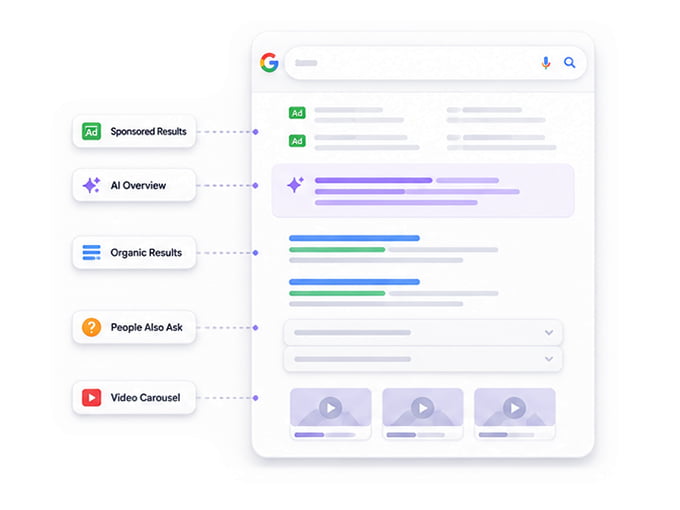
After identifying the likely intent, document the order of the major elements on the page. The SERP may begin with sponsored results, followed by an AI Overview, an organic listing, a People Also Ask section, several more organic results, and a video carousel.
The order matters because it determines how much attention is available to each result. A page reported as ranking third organically may appear close to the top on a simple SERP, but far below the visible screen on a feature-heavy one where ads, AI summaries, local packs, and other elements appear first.
Recording the layout also creates a baseline for future comparison. If a page’s traffic changes while its ranking remains stable, the historical layout can reveal whether a new feature appeared or whether existing elements changed position.
You do not need to describe every pixel. The objective is to document the elements that meaningfully affect visibility and user behavior. A consistent SERP snapshot is more useful than an informal note because it allows changes to be compared over time.
Step 3: Review the Page Types That Rank
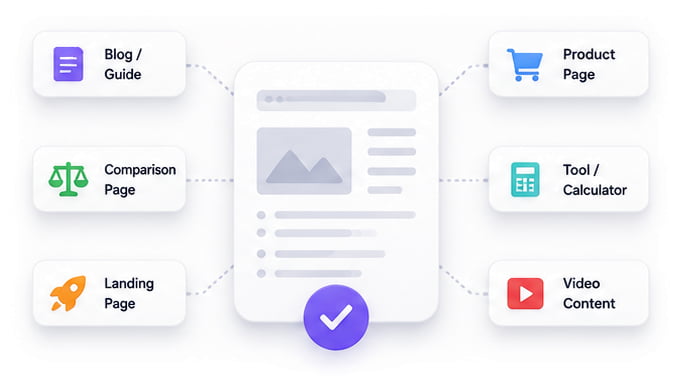
The type of page ranking near the top often indicates what Google considers appropriate for the query. Common page types include educational articles, product pages, category pages, comparison pages, tools, calculators, documentation, videos, forums, and local profiles.
If one format clearly dominates, creating a completely different page type may be difficult to justify. For example, if the strongest results are ecommerce categories, a general blog article may not satisfy the same commercial need. If the SERP contains long-form tutorials, a short sales page may be too limited.
Mixed page types can indicate that several interpretations of the query remain valid. In that situation, review which formats appear consistently near the top and whether your website has a credible reason to compete within one of those groups.
The decision should be based on the user’s need and your ability to create a strong resource, not simply on which format is easiest to publish. A page should fit the SERP environment while still offering something clearer, more useful, or more specific than the existing results.
Step 4: Identify the Real SERP Competitors
The domains visible in search may differ from the businesses you normally consider competitors. A SaaS company may compete with software review sites, affiliate publishers, YouTube channels, forums, documentation platforms, and large editorial websites.
These sources are search competitors because they occupy positions and features that could otherwise be available to your content. Review which domains appear repeatedly across the keyword and related queries, because a domain that ranks for many terms within the topic may represent a more important search competitor than a direct business rival that rarely appears.
Competitor analysis should also be performed at the page level. A large domain may be authoritative overall, but the specific ranking page may still contain weaknesses, outdated information, thin explanations, missing examples, or a poor user experience.
The objective is not to copy the competitor’s wording or structure. It is to understand why the page is useful, why Google may be rewarding it, and what would be required to create a genuinely stronger alternative.
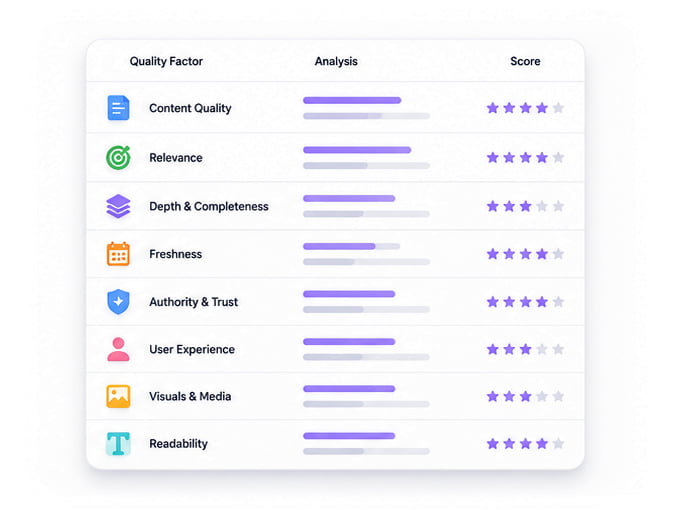
Step 5: Evaluate the Quality of the Top-Ranking Pages
Once the important competitors have been identified, review the pages in greater depth. Examine whether they answer the main question clearly, provide original evidence, use practical examples, include helpful visuals, and offer a logical reading experience.
Publication and update dates can also matter, particularly for topics that change quickly. An old date does not automatically make a page weak, but outdated recommendations, broken references, old screenshots, or unsupported claims can create a meaningful opportunity.
Review the author information and source quality when the topic requires trust. Anonymous pages may be less persuasive to users when the subject involves financial, legal, medical, or technical decisions, especially if the content offers advice that could influence important actions.
The amount of content should be evaluated in relation to usefulness rather than word count alone. A long article may repeat basic information without resolving the user’s problem, while a shorter page may succeed because it provides clearer instructions, original data, or a better tool. The goal is to understand the quality of the answer, not simply the length of the page.
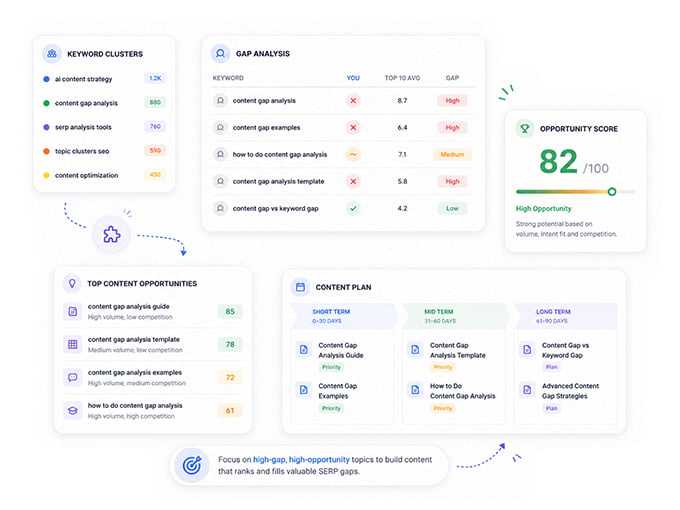
Step 6: Find a Genuine Content Gap
A content gap is an important user need that competing pages do not address effectively. It is not simply a keyword that no competitor has included in a heading, and it should not be treated as an excuse to add more text without improving the user experience.
The gap may involve missing examples, outdated information, unclear instructions, weak visual explanations, insufficient evidence, or a failure to address a particular audience. For example, several competitors may explain a concept accurately but provide no practical process for applying it, while others may offer a list of recommendations without showing how to prioritize them.
A useful gap can also involve format. Existing pages may rely entirely on text when a calculator, template, diagram, screenshot, or video would make the task easier. In some cases, the opportunity is not to write more, but to present the information in a more usable way.
The strongest opportunity usually emerges when the page can reduce uncertainty more effectively than existing results. Adding more words without adding more value is not a meaningful content gap strategy.
Step 7: Examine the SERP Features
The features appearing on the page influence both visibility and the type of content that may succeed. A local pack indicates that geographic relevance matters, a video carousel suggests that users may benefit from demonstration, product results reveal commercial intent, and Top Stories indicates that freshness is currently important.
The objective is not to document every feature in detail during each analysis. Instead, determine which features affect the opportunity and whether your website can realistically appear within them. Some features may be accessible with the right content format, while others may indicate that organic text results have limited visibility.
If an AI Overview occupies the top of the page, review which sources are linked and what type of information they provide. If a featured snippet appears, examine the format of the answer and whether it fully satisfies the query.
Our guide to SERP features explains the individual formats in greater depth. During SERP analysis, the important task is connecting those features to the keyword strategy, because a feature-heavy SERP may still be worth targeting if the expected outcome and content format are adjusted realistically.
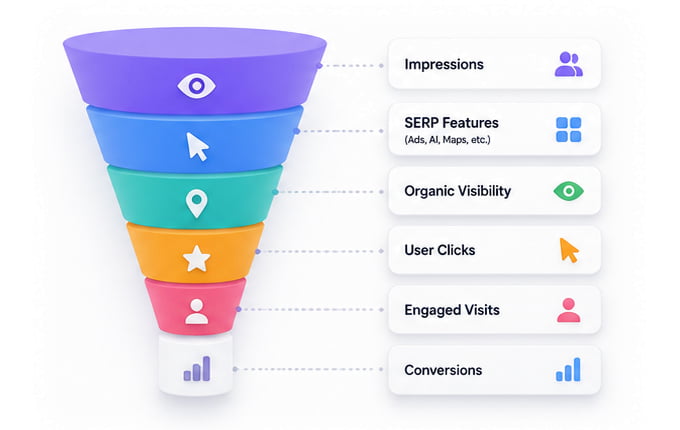
Step 8: Estimate the Real Organic Click Opportunity
Search volume represents estimated demand, but it does not equal the amount of traffic available to organic listings. Several search elements can absorb attention before a user reaches a conventional result, including advertisements, maps, products, direct answers, and AI-generated summaries.
A branded query may also send a large share of clicks to one expected website even when other pages rank. This means that two keywords with similar search volumes can provide very different organic opportunities depending on the SERP layout and user expectation.
The objective is not to assign a precise click percentage without reliable data. Instead, compare the relative visibility of organic results and identify the elements most likely to compete for attention.
A lower-volume query with a clean informational SERP may sometimes offer more useful traffic than a high-volume query dominated by other formats. Click potential should also be evaluated according to business value, because a smaller number of highly relevant visitors may be more valuable than a larger number of users with weak intent.
Step 9: Assess Ranking Difficulty in Context
Keyword difficulty metrics can be useful, but they should not be treated as final decisions. A score may be influenced by the authority and link profiles of the domains currently ranking, while failing to reflect content quality, intent alignment, or the presence of weaker pages.
Review the authority of the ranking domains, but also examine the specific pages. Determine whether they are highly relevant, recently updated, well linked, and clearly stronger than what your website could realistically produce.
Brand strength can also matter. Some queries are dominated by well-known sources because users expect those brands, while other SERPs are more open to specialized publishers that provide clearer or more focused answers.
The age and maturity of your website should be considered realistically. A new site may struggle to compete directly for broad commercial terms, but it could gain visibility through narrower queries and supporting content. Difficulty should therefore be treated as a combination of authority, relevance, content quality, intent, and available search features rather than one numeric score.
Step 10: Choose the Right Content Format
After reviewing intent, competitors, gaps, and difficulty, decide what type of page should be created. The correct format may be an educational article, comparison page, product page, category page, landing page, tool, template, video, or another resource.
The decision should follow the evidence visible on the SERP. If comparison pages dominate, publishing a generic definition may not be sufficient. If users are seeking instructions, a product page with minimal educational content may be unsuitable.
The selected format should also reflect the strengths of the business. A company with access to original product data may create a useful benchmark, while a service provider may be able to publish a detailed process based on practical experience.
The goal is not to reproduce the average result. It is to create the most useful format that still matches the established intent and gives users a reason to choose your result over the pages already ranking.
Step 11: Build the Content Brief
The SERP analysis should be converted into a content brief before writing begins. The brief should identify the target intent, primary audience, page type, central question, important subtopics, evidence requirements, visual assets, and internal linking opportunities.
It should also record what competing pages do well and where the planned content will provide additional value. A strong brief does not copy the headings from the top results; it uses the analysis to design a clearer and more complete experience.
The writer should understand why each section exists and which user need it addresses. This reduces the risk of producing a long article that covers many related phrases without maintaining a coherent purpose.
A useful content brief turns SERP analysis into execution. Instead of leaving the research as a collection of notes, it gives the writer, editor, SEO specialist, and designer a shared plan for what the page must accomplish.
How to Analyze an Existing Page With SERP Data
SERP analysis is not limited to new content. It can also explain why an existing page has gained or lost performance, especially when rankings, impressions, clicks, or CTR change without an obvious on-page issue.
Begin by comparing the current SERP with the page’s original target intent. Determine whether the dominant page types have changed and whether new features now occupy important positions. A page that was once well aligned may become less competitive if Google starts rewarding a different format or intent.
Review the competitors that recently improved. They may have updated their content, gained stronger links, introduced original data, improved page experience, or matched the intent more closely. The page itself should then be evaluated against the current results, including examples, structure, titles, visuals, freshness, and completeness.
However, not every decline requires an immediate rewrite. A temporary news event, seasonal change, or short-term ranking fluctuation may resolve without major intervention. Historical data helps determine whether the change is isolated or part of a sustained trend.
Manual SERP Analysis vs Automated Tracking
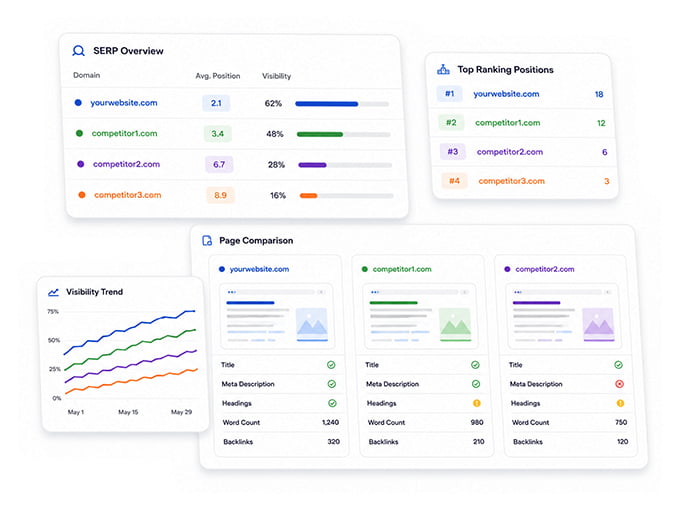
Manual analysis is valuable because it allows an SEO professional to interpret the results page carefully. It is particularly useful when selecting important keywords, building content briefs, and investigating unusual ranking changes.
However, manual searches become difficult to manage when a project contains hundreds or thousands of keywords. Results also vary by location, device, and personalization, which makes informal checks difficult to reproduce consistently.
Automated tracking provides regular position data under defined conditions and creates a historical record. This helps teams identify when rankings change, when competitors move, and when a keyword group begins trending in a different direction.
The strongest workflow combines both approaches. Automated monitoring identifies meaningful changes, while manual analysis explains what those changes may mean. A tool should support decision-making rather than replace professional interpretation.
How Often Should SERPs Be Analyzed?
The appropriate frequency depends on the importance and volatility of the keyword. High-value commercial queries may justify daily tracking because a small change can affect significant traffic or revenue, while stable informational keywords may not require the same level of attention.
Newly published pages should be monitored as Google discovers and evaluates them, but short-term movements should not automatically trigger major edits. A useful schedule distinguishes between monitoring and deep analysis.
Rankings may be checked regularly, while a complete manual SERP review is performed when a meaningful trend, competitor change, or traffic shift is detected. This prevents teams from spending time reacting to ordinary daily movement.
For important pages, the best approach is to combine ongoing rank tracking with periodic strategic review. This keeps the team aware of change without turning every small fluctuation into an unnecessary content update.
How SerpVision Supports SERP Analysis
SerpVision monitors keyword positions by country, device, search engine, and competitor while connecting ranking movement with page data and Search Console performance. This context helps teams determine whether a change affects a single keyword, a specific page, or a broader topic.
Competitor positions can be reviewed alongside the same tracked keywords, making it easier to identify which domains moved before a decline or gain. Search Console integration connects ranking movement with impressions, clicks, CTR, and landing pages, helping teams distinguish a visible ranking change from a movement that has little effect on actual traffic.
SerpVision also allows projects to separate markets, devices, and keyword groups rather than combining different conditions into one misleading average. This is important because a page may perform differently across mobile and desktop results, or across countries with different competitors and SERP features.
The objective is not to generate more reports. It is to create a clearer path from a detected change to the next useful action, whether that means updating content, improving internal links, monitoring a competitor, or rethinking the keyword strategy.
Final Thoughts
SERP analysis turns keyword research into a more realistic content and SEO strategy. It shows what users actually see, which page formats Google currently prefers, which domains compete for attention, and how much organic opportunity may remain after other search elements are considered.
The process should produce more than a collection of screenshots or competitor headings. It should lead to a clear decision about whether to target the keyword, what to create, how the page will provide additional value, and how performance will be measured.
By combining keyword data with search intent, competitor analysis, SERP features, and historical monitoring, SEO teams can prioritize opportunities more accurately. This helps avoid publishing content that was never suited to the results page in the first place and makes every new or updated page more strategically defensible.



Join the conversation
Share your question, add a practical note, or continue the discussion below.
No comments yet
Be the first to add a thought to this article.