
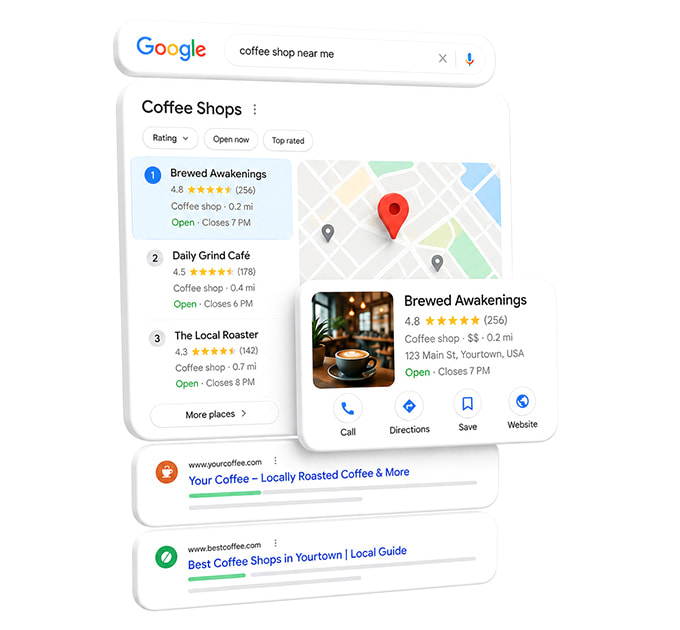
The combination of these elements changes from one query to another because search engines attempt to present information in a format that matches the user’s likely goal. A person searching for a nearby restaurant may see a map and business listings, while someone researching accounting software may see comparison articles, product pages, advertisements, videos, and reviews.
Understanding the SERP is important because ranking position alone does not describe how visible a page actually is. A website may hold the third organic position while appearing below advertisements, an AI-generated answer, or several other search elements. On another query, the same organic position may appear immediately near the top of the page and receive considerably more attention.
This guide explains what SERP means, how Google creates search results, what normally appears on a search results page, and why the structure of the SERP matters for SEO.
What Does SERP Mean?
SERP stands for Search Engine Results Page. It is the page a search engine displays after a user submits a search query.
When someone searches for a phrase such as “best keyword rank tracker,” Google creates a results page containing information that it believes can help answer that request. The page may contain software landing pages, editorial comparisons, review websites, sponsored results, videos, and other search elements.
Although every search engine has its own results page, SEO professionals most frequently use the term SERP when discussing Google. The exact design of the page may differ between Google, Bing, and other search engines, but the general purpose remains the same: to connect a search query with information that may satisfy the user’s need.
A SERP should not be viewed as a permanent or universal page. Its contents can vary according to the wording of the query, the user’s location, the selected language, the device being used, and the type of information available. Search engines may also change the layout as they introduce new features or respond to changes in user behaviour.
For this reason, two users can perform similar searches and receive results pages that are not identical. The differences are especially noticeable for local searches, multilingual searches, and queries where current events or recent information are important.
Stop guessing where your pages rank on Google
Track keyword positions across different countries, locations and devices. See ranking changes, uncover new opportunities and react before your competitors do.
No complicated setup. Add your keywords and start tracking.
How Does Google Create a SERP?
Before a page can appear in Google Search, Google must first discover it, process its content, and decide whether it should be stored in the search index. When a user performs a search, Google then evaluates the information available in that index and selects results that appear relevant to the query.
Google describes this process through three broad stages: crawling, indexing, and serving search results. Crawling allows Google to discover and download content, indexing helps it analyze and store information, and serving refers to the process of selecting information for a particular search.
Crawling and Discovering Pages
Crawling is the process through which Google discovers pages on the web. Automated programs called crawlers follow links, read sitemaps, and revisit previously discovered websites to find new or updated content.
A page connected to the rest of a website through clear internal links is generally easier to discover than a page that has no navigational connection to other content. External backlinks can also introduce Google to pages that it has not previously visited.
The fact that Google has crawled a page does not mean the page will automatically appear in search results. Crawling only confirms that Google was able to access and download some or all of the page’s content.
Technical restrictions can interfere with this process. Server errors, inaccessible resources, incorrect robots.txt rules, and poorly rendered JavaScript can all make it more difficult for search engines to process a page correctly.
Indexing and Understanding Content
After crawling a page, Google attempts to understand what the page contains and how it relates to other information on the web. It may analyze the visible text, headings, images, videos, links, structured data, language, and other page elements.
Google can then decide whether the page should be added to its search index. The index is a large database containing information about pages and other resources that may be considered when users perform searches.
A page can be crawled without being indexed. This may happen when Google identifies a duplicate version, finds a canonical alternative, encounters an indexing restriction, or decides that storing the page would not improve its search results.
Indexing also does not guarantee ranking. It simply means the page is eligible to be considered for relevant searches. Google still needs to determine whether the page is useful and appropriate for each individual query.
Understanding the Query
When someone performs a search, Google attempts to understand the meaning and purpose behind the words rather than relying entirely on exact keyword matching.
A query such as “how to monitor keyword rankings” suggests an informational goal, while “best rank tracker for agencies” indicates that the user may be comparing products. A search for “SEO consultant near me” has a local purpose, and a branded query may indicate that the user wants to reach a specific company or website.
The likely purpose behind a query is commonly known as search intent. Search intent strongly influences both the pages that rank and the overall structure of the SERP.
If Google interprets a search as informational, it may display guides, videos, related questions, and explanatory content. A commercial query may produce product pages, comparisons, reviews, and advertisements. A local query may prioritize maps and business profiles.
Selecting and Presenting Results
After understanding the query, Google evaluates potentially relevant information using multiple ranking systems. These systems consider factors related to relevance, usefulness, quality, freshness, context, and other characteristics of the content.
Google then presents the selected information in the format it believes will be most helpful. The result may be a relatively simple list of organic pages, or it may contain advertisements, maps, videos, products, news, or AI-generated information.
This presentation stage explains why the same organic ranking position can have different levels of value. A page ranking second organically may appear close to the top on one SERP but much farther down on another because several search elements are displayed before it.
What Usually Appears on a Search Results Page?
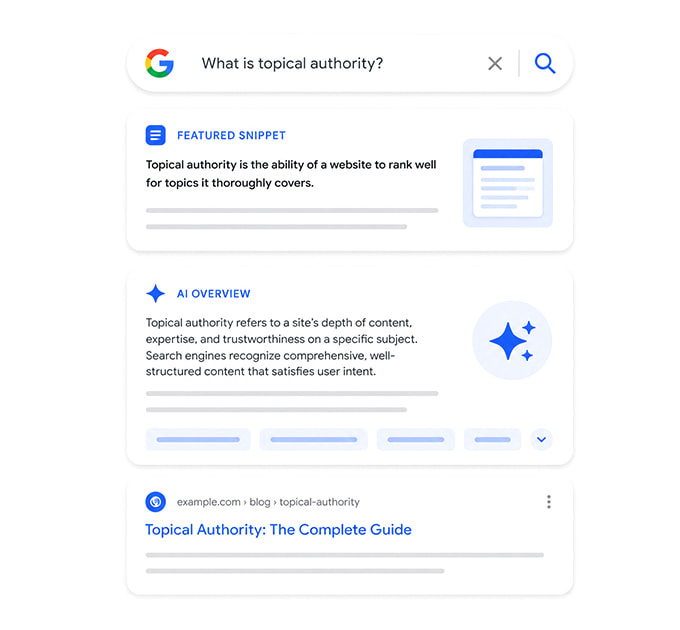
A modern search results page can contain many different elements, but most of them can be placed into three broad groups: organic results, paid results, and SERP features.
Google’s search appearance documentation shows that its results pages are built from multiple visual elements that users can view or interact with. These elements are not limited to standard text listings and may appear differently depending on the query.
Organic Search Results
Organic results are unpaid listings selected by the search engine’s ranking systems. A website does not pay Google to appear in these positions.
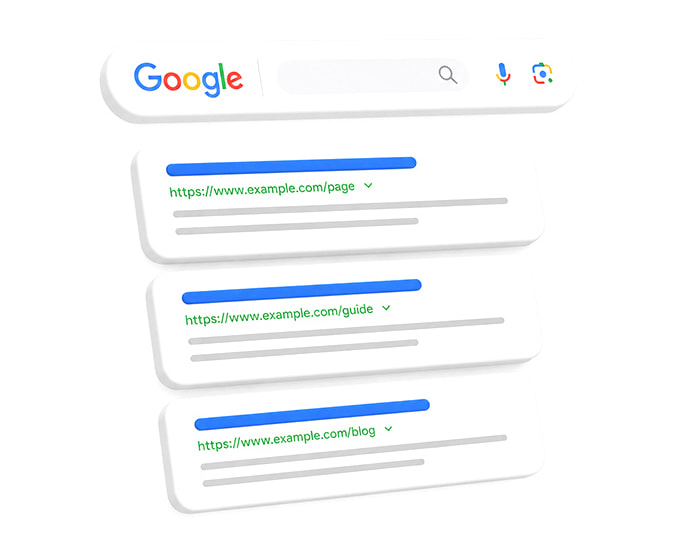
A standard organic result normally contains a site name, a visible URL or breadcrumb path, a clickable title, and a descriptive snippet. Depending on the page and query, Google may also display images, publication dates, ratings, product details, or additional links.
Organic listings remain an important source of website traffic, but they no longer exist in isolation. They frequently appear alongside advertisements, maps, videos, products, and other search elements that compete for the user’s attention.
The first organic result is therefore not always the first result visible on the page. On a commercial query, several sponsored listings may appear above it. On a local query, it may be placed beneath a map and business listings.
Paid Search Results
Paid results are advertisements displayed through systems such as Google Ads. These listings are normally marked with a label such as “Sponsored” so users can distinguish them from unpaid results.
Advertisements may appear above or below the organic listings and can occupy a significant amount of space for competitive commercial searches. Their placement is determined through an advertising auction that considers several factors, including the bid, relevance, and expected performance of the advertisement.
Paid advertising and organic ranking are separate systems. A business cannot purchase a higher organic position by increasing its Google Ads budget.
Nevertheless, advertisements affect the visual environment of the SERP. When several sponsored results appear before the first organic listing, organic pages may receive less immediate attention even if their ranking positions remain strong.
SERP Features
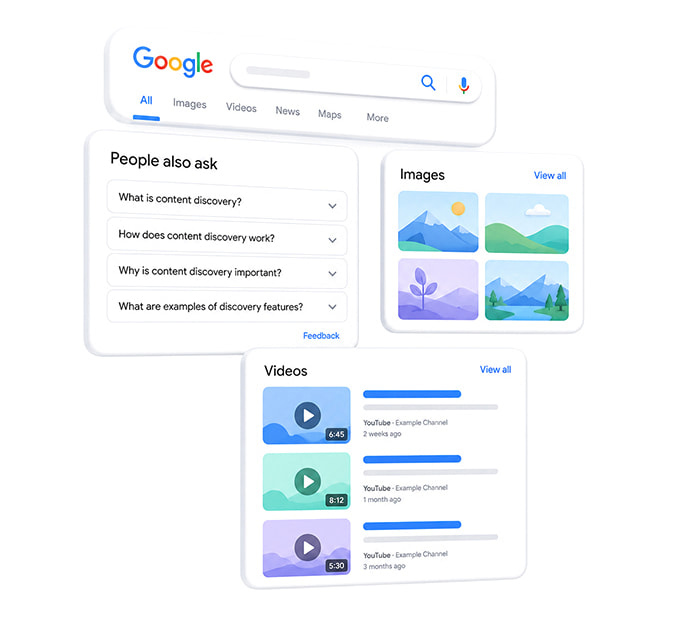
SERP features are search elements that go beyond a standard organic or paid text listing. Examples include AI Overviews, featured snippets, local packs, People Also Ask boxes, product results, image packs, video results, and knowledge panels.
These features are used when Google believes that a different format can answer the query more effectively than a conventional list of links.
SERP features may push organic results farther down the page, but they can also create additional opportunities for visibility. A website may appear through a video, image, local result, featured answer, or supporting link even when it does not hold the highest standard organic position.
Because SERP features represent a separate and detailed topic, they should be analyzed independently rather than being treated as a small variation of organic listings. Our complete guide to Google SERP features explains how the most important formats work and how they affect organic visibility.
What Does a Standard Organic Result Contain?
A standard organic result contains several elements that help the user identify the source, understand the subject of the page, and decide whether clicking the result is likely to be useful.
Website owners can influence some of these elements, but Google ultimately determines how the result is presented. The displayed title and snippet may also change depending on the query.
Site Name and Breadcrumbs
The upper portion of an organic result normally identifies the website. It may contain the site favicon, the site name, the domain, and a breadcrumb path.
This information gives users context about the source before they visit the page. A familiar and clearly presented brand may inspire more confidence than a result whose source is difficult to identify.
Breadcrumbs can also show the page’s location within the website. Instead of displaying a long technical URL, Google may present a path such as “Blog › SEO › Rank Tracking.”
A logical website hierarchy, clear navigation, and consistent internal linking can make these relationships easier for search engines to understand.
Title Link
The title link is the clickable heading of the search result. It is often the most prominent element within a conventional organic listing.
The page’s HTML title is an important source for this heading, but Google may also use the visible page title, headings, prominent text, and anchor text when generating the displayed title.
A clear title should describe the page accurately, match the user’s likely intent, and distinguish the result from competing pages. It should not repeat the same keyword unnecessarily or promise information that the page does not provide.
The title displayed by Google may differ from the title written by the website owner when Google determines that an alternative version better represents the page or query.
Search Snippet
The search snippet is the descriptive text displayed beneath the title. It provides additional information about the page and helps users decide whether the result is relevant.
Google may use the page’s meta description, but it can also select text from the visible content when another passage appears more closely related to the search query.
This means the meta description should be treated as a useful recommendation rather than guaranteed display text. Important definitions and explanations should appear naturally within the page content so that Google can select them when appropriate.
A good snippet should accurately represent the page rather than relying on vague marketing language. Users are more likely to trust and visit a result when its description clearly matches the information they are seeking.
Sitelinks and Enhanced Results
Some results contain additional links that direct users to important sections of the same website. These are known as sitelinks and may lead to pages such as pricing, documentation, account access, product categories, or contact information.
Google generates sitelinks automatically based on its understanding of the website structure. Clear navigation and descriptive internal links can help search engines identify which pages may be useful shortcuts.
Other results may display additional details such as ratings, product prices, availability, dates, or images. These enhanced formats are commonly known as rich results.
Google can use supported structured data to understand certain types of information and determine whether a page is eligible for a richer appearance. Eligibility does not guarantee that the enhanced format will be shown.
Why Do SERPs Differ Between Users and Keywords?
Search results can vary because Google attempts to provide information that is relevant to the circumstances of each search. Location, language, device, query wording, and timing can all influence what appears. These differences are especially important for businesses that operate in multiple regions or depend on local customers.
Location and Language
A search for “digital marketing agency” may produce different results in New York, London, and Sydney because local businesses and regional websites become more relevant in each market.
Language settings can also influence which pages appear. A multilingual website may rank differently depending on whether the user searches in English, Spanish, German, or another language.
For international SEO, rankings should therefore be monitored separately for each important country and language rather than being combined into a single average.
Mobile and Desktop Results
Mobile and desktop users may see the same underlying pages, but the visual experience can differ substantially. On a smaller screen, a large search feature may occupy several screen lengths before the first organic result becomes visible. A result that appears relatively prominent on desktop may therefore feel much less visible on mobile.
Google uses mobile-first indexing, which means that the mobile version of a site’s content is used for indexing and ranking. Maintaining consistent and accessible content across devices is consequently important.
Search Intent
Small changes in wording can produce different results because the implied intent changes. “CRM software” may produce product pages and comparison websites, whereas “how CRM software works” is more likely to produce educational content. The subject is related, but the user’s goal is different.
The types of pages and search features shown on the SERP provide useful evidence about how Google currently interprets the query.
Changes Over Time
SERPs also change because new content is published, competitors update their pages, trends develop, and Google introduces or adjusts search features.
A results page that appears stable today may look different several months later. News events can also temporarily shift the results toward recent coverage before the page returns to a more evergreen structure.
Historical tracking is therefore useful because a single manual search cannot show whether the current SERP is normal, temporary, or part of a longer trend.
Why Are SERPs Important for SEO?
SEO is often described as the process of improving rankings, but rankings exist inside a larger search environment. The structure of the SERP determines how visible those rankings are and what other elements compete for attention. Understanding that environment helps website owners select better keywords, create more appropriate content, and interpret performance more accurately.
Ranking Position Does Not Equal Visibility
A high organic ranking can be valuable, but the ranking number does not explain where the result appears visually. A page may rank third while sitting beneath advertisements, maps, products, or an AI Overview. Another page with the same ranking may appear close to the top because the SERP contains few additional elements.
This is why rankings should be reviewed alongside the overall page layout. Position data is more useful when it is connected to the elements surrounding the result.
The SERP Reveals Search Intent
The results page shows which page formats Google currently considers relevant. If product and category pages dominate, an informational article may not be the right format. If detailed guides and tutorials occupy the strongest positions, a short commercial landing page may struggle to meet the same need.
Studying the SERP before creating content reduces the risk of targeting a keyword with the wrong type of page.
Search Competitors May Be Different From Business Competitors
A company’s direct commercial competitors are not always the websites that compete with it in search. A software provider may find itself competing against review publishers, news websites, forums, video creators, and documentation platforms.
The SERP reveals which pages are actually competing for the user’s attention. This information is often more useful for content planning than a list of companies selling similar products.
Search Demand Must Be Evaluated in Context
Keyword search volume indicates how often a query may be performed, but it does not show how much traffic is available to organic results. Some searches are dominated by advertisements, maps, products, or direct answers. Others provide a clearer path toward standard organic listings.
A strong keyword strategy considers both demand and the layout through which that demand is distributed.
How SerpVision Helps Monitor Search Results
Checking a keyword manually can show what the SERP looks like at a particular moment, but it does not provide a reliable historical view.
SerpVision tracks keyword positions by market, device, and search engine, while connecting ranking movement with competitor positions and Search Console data. This makes it easier to understand whether a change affects one keyword, one page, or a wider group of queries.
The purpose of tracking is not to react to every small daily fluctuation. It is to identify changes that are significant enough to affect visibility, traffic, or business performance.
When rankings are reviewed alongside impressions, clicks, CTR, landing pages, and competitor movement, the SERP becomes a source of practical information rather than a simple list of positions.
Final Thoughts
A SERP is not simply a numbered list of websites. It is a dynamic results environment shaped by the query, user context, available information, and the formats Google believes will be most helpful.
Understanding the SERP makes keyword research more realistic because it shows what users actually see, which page types currently satisfy the query, and how much competition exists for attention.
Rankings remain important, but they become more meaningful when they are interpreted alongside the complete results page. By examining organic listings, paid placements, search features, competitors, and historical changes together, SEO teams can make better decisions about which opportunities deserve their time.


Join the conversation
Share your question, add a practical note, or continue the discussion below.
No comments yet
Be the first to add a thought to this article.